
BY BILAL MUHAMMAD
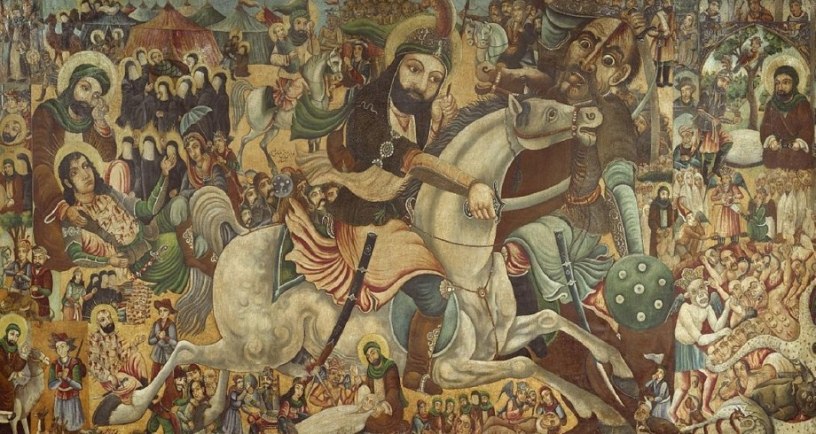
On the tenth of Muharram, in the year ~61 After Hijra, al-Husayn b. `Ali b. Abi Talib (peace be with him) was murdered alongside members of his family, companions of the Prophet Muhammad (the blessings and peace of God be with him and his family), and scores of Husayn’s friends and loyalists.
Just a few short years after the spectacular rise and spread of Islam, people who called themselves Muslims waged war against the Prophet’s family and severed the head of his grandson. Husayn’s head was thrust onto a spear, and it was paraded into Damascus. His women were taken captive and marched through the streets in chains. The Muslim world watched these events transpire without much intervention.
This betrayal occurred despite the fact that the Prophet lauded and extolled Husayn throughout his lifetime. The best of people suffered the worst of calamities. Bloodshed took place during the holy month of Muharram, a time when fighting was typically prohibited. All this occurred amidst the first generations of Muslims, who (we have been told) were the best of all generations. In a time when relics of history are sought and preserved, it surprises us that the flesh-and-blood of the Prophet can be treated this way. Why did this happen? How could this happen?
Husayn’s killing was so antithetical to the Islamic tradition that it puzzles and shakes the Muslim consciousness till this day. It inspires poems, passion plays, films, annual commemorations, and tens of millions of visits to his resting place in Iraq every year. Even though it can be a dangerous and even fatal trip, people from all walks of life risk their lives and wellbeing to get a glimpse of his shrine. Billions of tears have been shed all over the world.
The story of Husayn is one of love, sacrifice, loyalty, betrayal, politicking, calamity, and even beauty. It encapsulates all the core ethics of the Quran, as Husayn courageously put his full trust in God and His divine decree. In the words of Dr. Ahmad Pakatchi, most of the Quran is relative-comparative, in that its stories lack names, dates, and chronologies, and are instead told in a timeless and universal manner. The story of Husayn is similar – the family of the Prophet would invite poets, not historians, to speak on the tragedy and create a metahistorical relationship between the believer and al-Husayn.
The Prophet Muhammad (may the blessings and peace of God be with him) said, “Those who suffer the most are the prophets, then those similar to them, then those similar to them.” (إن من أشد الناس بلاء الأنبياء ، ثم الذين يلونهم ، ثم الذين يلونهم) This isn’t an expression of masochism, but a statement of reality: those committed to the cause of justice will inevitably make great sacrifices. They are not self-interested pragmatists, who could shift their ethical paradigm for personal gain; they are selfless moralists who endure costly pains to create a better world. The logical end of upholding any ideal is being accountable to it, even if it means taking a loss. Justice requires people who talk the talk, walk the walk, give up their wealth, and put themselves in grave danger. This is why suffering is at the heart of love – the righteous will endure more trials than others, but love drives them anyway. Suffering is redemptive: it tries us to make us stronger, and it purifies us to make us purer.
That being said, the believer ought to look at his own problems as a storm in a teacup. You ought not be sadistic and you ought to restrict any suffering in the most ethical way. Your commitment to patience and good character must be steadfast. Your pain is not a deity that is to be feared or worshiped. Victimhood is not to be gloated, nor should it blind us to the suffering of others. The Passion of Husayn teaches us to belittle our own trials by juxtaposing them to the trials of Husayn and his family. We are ordinary people suffering ordinary trials.
Husayn’s mission was not borne of arrogance or sedition, but a desire to rectify the Nation of his grandfather. He sought to enjoin in established virtues and end evil. The caliphal throne had become an imperial enterprise ruled by greedy tyrants and ignorant fools. Husayn wanted to bring it back to its original purpose: righteous stewardship. He wanted to fulfill its promise. Despite his downfall, Husayn became a symbol for the downtrodden. His legacy survives through his teachings in theology, law, exegesis, character, prophetic tradition, ethics, and eschatology. Pertinently, his legacy includes a story that is passed from father to son, mother to daughter, from one waterfall of tears to another, down an uninterrupted lineage.
There are many lessons to glean from the tragedy. Despite the pandemonium, Husayn and his companions retained their good character and patience all throughout the Passion. We often blame our outbursts on having a bad day, but the insurmountable stress of the bloodshed never got to their heads. Secondly: Husayn’s principled stance stood the test of time, and his legacy overcame that of his opponents. Thirdly: unchecked corruption can make it to the highest echelons of religious leadership and flip its own ideals onto its head. Fourthly: women are just as capable of becoming paragons of truth, justice, and courage, as they played a key role in defining Husayn’s legacy. Fifthly: it is never too late to repent, as Hurr and others joined Husayn after realizing that it was the moral thing to do, even if it meant certain death. Finally, the love and loyalty of friends and family are one of life’s greatest blessings. Those who are there for you are not always the ones you expect, and those who abandon you are sometimes the ones that you depend on.
May God help us internalize these timeless lessons, taught by the example of a timeless hero.
***
(To read more from Bilal Muhammad, check out his books The Good Shepherd: Jesus Christ in Islam and Pandemonium: A Sourcebook on the Tragedy of Husayn.)
 Fellowship & Fairydust