
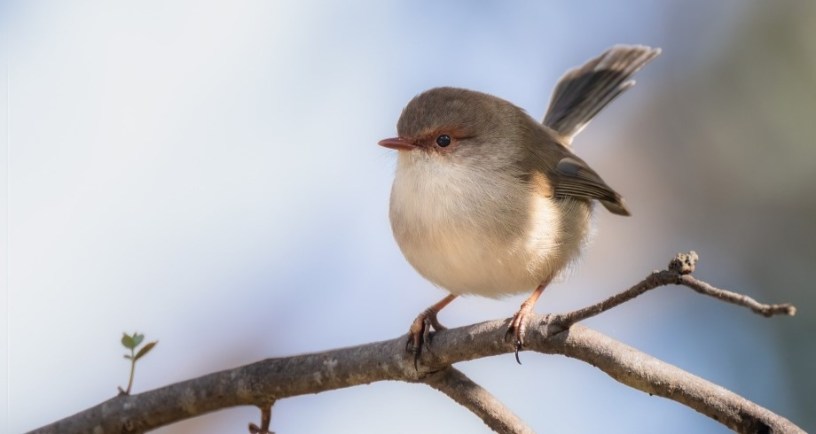
BY I.H. MALMGREN
Warning: the story depicts the death of an animal.
Once upon a winter in Scotland, when the snow lay heavy upon the ground and icicles adorned the roofs of homes, there was a small village nestled in the midst of the white landscape. It was a village of hardy folk, accustomed to the harsh winters of the highlands, but this winter was unlike any they had ever experienced. The air was so frigid that even the hardiest of souls shivered beneath their layers, and the snow seemed to never end.
Amidst the bleakest and coldest winter, the village had ever known, the people huddled together for warmth and shared stories of the past to keep their spirits up. They spoke of winters long ago, of magical creatures and heroes who had braved the cold, but none could recall a winter as bitter as this one.
“Why, I daresay,” said McDougall, his breath clouding the air, “it’s so cold that even the hairs in my beard have frozen solid!”
Fergus chimed in, “Aye, and I’ve seen the loch freeze over so thick, the sheep could skate across without so much as a care!”
McTavish added, “My old hound can barely walk without his paws sticking to the ground!”
Despite the challenges the relentless cold presented, the people of the village held on to their love for one another, and their trust in each other’s strength. They banded together, sharing what little they had, and faced the hardships with unwavering resolve. For they were strong of heart, and they endured this hardship, as they had endured countless others before it.
The village itself was a collection of quaint, weather-worn cottages huddled together, their chimneys sending spirals of smoke into the frosty air. At the very edge of the village, there stood a small, dilapidated cottage, its roof sagging under the weight of the snow, and its walls battered by the relentless wind. This was the home of young Callum and his mother, a meager shelter that did little to protect them from the icy grasp of winter.
Inside the humble dwelling, Callum and his mother made the best of their circumstances, their love for each other a beacon of hope amidst the cold and darkness. The cottage was sparsely furnished, with a small table, a few rickety chairs, and a simple bed where they both slept, huddled together beneath thin, threadbare blankets.
“Callum, my love,” his mother would say, her voice weak but filled with affection, “no matter how hard things may seem, we’ll always have each other.”
Callum, his eyes shining with determination, would reply, “Aye, Mother. We’ll get through this, together.”
Day by day, they supported one another, sharing what little they had and finding solace in each other’s company. They spoke of their dreams for a brighter future, and their love for one another was a balm that soothed their weary souls.
However, as the days wore on and the cold winter tightened its grip on the village, it became increasingly apparent that Callum’s mother was unwell. Though she tried her best to maintain a brave facade, her persistent cough and pallid complexion betrayed her weakened state.
One day, as she attempted to mend a hole in one of their few blankets, her hands shook uncontrollably, her fingers unable to hold the needle steady. In her weakened state, she stumbled and fell, her frail body collapsing onto the cold, hard floor.
“Mother!” Callum cried out, rushing to her side. “Are ye alright?”
His mother, her face flushed with embarrassment and pain, struggled to sit up. “I’m just… just a bit tired, that’s all,” she whispered, her voice barely audible.
Callum, his heart heavy with worry, helped her to her feet, wrapping a protective arm around her frail frame. “Mother, ye mustn’t push yerself so hard,” he implored, his voice thick with concern. “I can take care of things around the house.”
His mother, her eyes brimming with gratitude, pressed a trembling hand to his cheek. “Callum, my sweet boy,” she murmured, “your love and compassion… they are a gift. Thank you for being there for me.”
In the days that followed, Callum took on the responsibility of caring for his mother and their home, but it was becoming increasingly clear that their meager provisions were dwindling as the winter wore on. The lack of food, combined with the relentless cold, only served to worsen his mother’s condition, and Callum knew that he needed to do something, anything, to save her.
One evening, as Callum sat by his mother’s side, watching her struggle to breathe, she reached out and took his hand, her touch weak but filled with love. “Callum,” she whispered, her voice barely audible, “there’s something I need to talk to ye about.”
“What is it, Mother?” Callum asked, his heart pounding with fear.
His mother took a deep, ragged breath and continued, “I don’t want ye to worry, my love, but I need to prepare ye for the possibility that I… I might not get better.”
Callum’s eyes widened, tears threatening to spill. “No, Mother, don’t say that. Ye will get better. You must.”
His mother shook her head gently, her eyes filled with sadness. “I wish I could promise ye that, my love, but I need you to be strong, no matter what happens. Promise me, Callum, that ye’ll look after yerself, even if I’m not here to do it for ye.”
Callum clenched his jaw, fighting back the tears. “I promise, Mother, but I don’t want to think about that. I can’t bear the thought of losing you.”
“I know, my sweet boy,” she whispered, her voice filled with love. “But I need ye to understand that, no matter what happens, I will always love ye, and I will always be with you, in your heart.”
Callum stared at his mother, the weight of her words pressing down on him. “Mother, it’s not fair,” he choked out, his voice cracking with emotion. “Why is this happening to us? Why do we have to suffer so much?”
His mother sighed; her eyes filled with tears. “Life has many hardships, Callum. I wish I could shield ye from them, but sometimes, all we can do is face them head-on and do our best to overcome them.”
Callum felt a surge of anger and sadness well up inside him, his emotions threatening to overwhelm him. “I hate it, Mother! I hate how unfair it all is!” With that, he leapt to his feet, the force of his emotions propelling him out the door and into the cold night.
As Callum ran through the snow, his heart heavy with worry and grief, he dwelled on his mother’s condition. The thought of losing her was too much to bear, and he felt a desperate need to do something, anything, to save her.
As he ran, his thoughts raced, searching for a solution, a miracle that could turn their fortunes around, but alas he could think of nothing.
As Callum wandered through the snow-covered village, his mind drifted back to the previous summer, when the days were long and warm, and his mother was still healthy. Despite their poverty and hunger, they had been happy, finding joy in the simple pleasures of life and the love they shared for one another.
In his mind’s eye, Callum could see himself and his mother sitting outside their cottage, basking in the sunlight. His mother’s laughter filled the air as she playfully teased him, asking about his plans for the future.
“So, my boy,” she had said, her eyes twinkling with mischief, “what grand adventures do ye have in store for yerself? Will ye become a brave knight, perhaps, or a wealthy merchant, traveling the world and bringing back treasures for your dear old mother?”
Callum, grinning widely, had replied, “Oh, Mother, I don’t need to be a knight or a merchant to have grand adventures! Life is a grand adventure, and as long as I have ye by my side, we shall always be happy.”
His mother’s face had softened, and she had reached out to ruffle his hair affectionately. “Aye, Callum, ye’re right. The love of family and the blessings of good health are worth more than all the gold in the world. Never forget that, my love.”
As the memory faded, Callum felt a lump forming in his throat, and he muttered to himself, “I’d give anything to have those days back, to see her healthy and laughing again. Spring can’t come soon enough.”
The thought of spring brought a flicker of hope to Callum’s heart. He couldn’t help but notice how much healthier she had been in the warm summer air. Perhaps if spring arrived sooner, it could restore her vitality and bring her back from the brink of death. It was a fool’s hope, but it was a hope nonetheless.
As Callum wandered through the village, still struggling with his emotions, he stumbled upon his elderly neighbor, Old Angus, who was carrying a small bundle of firewood. Angus was an elder of the village and the wisest man in Callum’s life.
“Ah, Callum, my boy,” Angus said, his voice warm and kind. “I could use some help gatherin’ more firewood for the village. Would ye care to lend an old man a hand?”
Callum wiped his tears away and nodded. “Aye, Angus, I’ll help ye.”
As they walked towards the forest, Angus asked, “How is yer mother, lad? I’ve heard she’s not been doin’ so well.”
Callum’s voice trembled as he replied, “She’s… She’s gettin’ worse, Angus. I’m scared I might lose her.”
Angus sighed heavily, his eyes filled with empathy. “I’m truly sorry to hear that, Callum. Life can be cruel at times, but remember that there’s always hope. Pray for her, and do not let yer fears consume ye.”
They continued deeper into the forest, collecting firewood along the way. Old Angus knew that Callum and his mother were struggling, and he wanted to ensure they had enough wood to keep their hearth fire burning. As they worked, he decided to give Callum some money for their efforts, hoping it might also help ease their burden.
While they gathered wood, a small wren flitted among the branches overhead, catching Angus’s eye. He smiled and pointed it out to Callum.
“Look there, lad. Do ye see that wren? It reminds me of an old Scottish fable about the wren and the holly? Have ye heard it? It’s a fine story with a touch of magic.”
Callum’s eyes lit up with excitement. “No, I haven’t. Please, tell it to me!”
Angus smiled, “Aye, lad, it’s a tale worth hearin’. Many winters ago, when the cold and snow had taken hold of the land, the animals of the forest found themselves strugglin’ to survive. One by one, they came to the wren, the King of Winter, to ask for boons that would help them through the harsh season.”
Callum leaned in closer, eager to hear more. “What did they ask for, Angus?”
“Well, the requests were as varied as the animals themselves. The fox asked for cunning, the hare for speed, and the deer for grace. The wren granted each of their wishes, blessin’ them with the gifts they sought.”
“But what about the holly?” Callum asked, his curiosity piqued.
“Aye, the holly, I was getting’ to that,” Angus continued. “She, too, had been watchin’ the animals receive their boons and decided that she would ask the wren for one as well. So, the holly approached the wren and humbly asked if she could remain green and verdant throughout the entire winter.”
Callum’s eyes widened in wonder. “That’s a brilliant wish! But what did the holly offer the wren in return?”
Angus smiled as he explained, “In exchange for this boon, the holly offered the wren her bright red berries as sustenance during the winter months. The wren, appreciatin’ the holly’s generosity, granted her wish, and from that day forward, the holly remained green and vibrant even in the depths of winter.”
Callum looked around, spotting a nearby holly bush adorned with bright red berries. “So that’s why the holly stays green all winter long and has those beautiful berries!”
“Indeed, lad,” Angus confirmed. “Now the holly is the most beautiful plant during the winter months, beloved by the wren and other birds who feast on her berries. The holly’s selfless act of kindness earned her a special place in the hearts of all creatures, teachin’ us that even in the darkest times, beauty and generosity can still flourish.”
Callum gazed at the holly, “I wish I could be strong like the holly and be generous during my darkest times too. Thank ye for sharin’ this story with me.”
Angus patted Callum’s shoulder, glad that the fable had resonated with the boy. “Yer welcome, lad. Remember, there’s wisdom in the old tales, and there’s always somethin’ to learn if we’re willin’ to listen.”
Callum, still enchanted by the fable of the wren and the holly, looked to Angus with curiosity. “Angus, what did you mean when you said the wren is the ‘King of Winter’?”
Angus scratched his chin thoughtfully, “Well, lad, I’m not exactly sure, but it reminds me of an old superstition from my youth. Would ye like to hear about it?”
Callum’s eyes sparkled with interest. “Aye, Angus! Please.”
“Alright, Callum,” Angus began. “When I was but a wee lad, there was a belief among the villagers that since the wren was called the King of Winter, his death had the power to put an end to winter. To show their respect and admiration for the wren, they held a grand funeral procession for him each year, as a symbolic way to end winter, and make way for spring.”
“A funeral procession for a bird?” Callum asked, his eyebrows raised in surprise.
“Aye, lad. It may sound strange, but it was a sight to behold. The villagers would march through the center of town, dressed in their finest garments. They cried out praises to the wren, honoring him for his role as the King of Winter. There was much solemnity, and the entire village came out to mourn the noble wren.”
Callum listened intently, trying to picture the scene in his mind. “What happened after the funeral procession, Angus?”
Angus leaned in closer, a twinkle in his eye as he recounted the tale. “Well, Callum, some say that the very next day, the first signs of spring would appear. The snow would begin to melt, and the air would warm ever so slightly. It was as if the wren had heard their pleas and granted them an early reprieve from winter’s icy grip.”
Callum’s eyes widened in amazement. “Do ye think it’s true, Angus? Did the wren’s death really have the power to end winter?”
Angus smiled, the lines around his eyes crinkling as he did so. “It’s hard to say, lad. There’s always a bit of mystery and magic in the old ways. Perhaps there’s some truth to the tale, or perhaps it’s simply the power of the villagers’ faith and belief that brought about the change. Whatever the case, it’s a fine tale to remember and to pass on.”
Callum nodded, captivated by the tales of the wren and the magic of the old ways. He looked up at Angus with admiration and gratitude, glad to have him in his life. “Thank ye, Angus. I’ll always remember these stories and the lessons that they hold.”
Angus patted Callum on the back. “That’s all I could ask for, lad. Now let’s get back to the village. Your mother will be waiting for us, and we have a whole lot of firewood to carry.”
As Callum and Angus approached the small cottage, they exchanged their farewells. Angus handed Callum a few coins for the firewood, and Callum thanked him for his company and guidance.
“Thank ye, Angus. I appreciate everything ye’ve done for me and Ma,” Callum said earnestly.
“Ye’re welcome, lad. Just remember what I told ye about being there for yer mother. And keep praying for her,” Angus replied, patting Callum on the shoulder before turning to leave.
Callum entered the cottage to find two of their neighbors, Mairi and Fiona, tending to his mother. They were changing her damp sheets and applying cool cloths to her feverish forehead. The sight of his mother, even weaker than before, made his heart sink.
As the two women continued to care for his mother, Callum overheard their hushed whispers. “She doesna look good, Fiona. I dinnae know how much longer she can hold on,” Mairi said quietly.
Fiona nodded solemnly. “Aye, it’s a terrible thing. And what’ll become of poor Callum if she passes? The lad has no other family to take him in.”
Callum felt as though someone had pulled his heart out of his chest. The idea that his mother might die and leave him alone was too much to bear. He retreated to his small bed in the corner of the room, tears streaming down his face.
As he lay there, he desperately tried to connect the pieces of the stories and folklore he had learned from Angus. There had to be some way to use the wren, the King of Winter, to save his mother. He whispered to himself, “Wren… King of Winter… Wren… King of Winter…”
His exhausted mind churned with thoughts of the wren, the fable, and the funeral procession, searching for a solution. But the answers remained elusive, and eventually, sleep claimed him, his whispers still echoing in the air.
Callum, filled with excitement, rushed out of his cottage the next morning. The connection between the wren’s departure, the end of winter, and his mother’s recovery had become clear to him, and he couldn’t contain his enthusiasm. As he ran through the village, he shouted his epiphany for all to hear.
“It’s the wren! The wren’s the key to ending winter and saving my mother!” he exclaimed, his eyes wide with hope.
Determined to put his plan into action, Callum sought the help of the other children in the village. He gathered them together, his voice full of urgency as he explained his theory.
“Listen, everyone! I’ve figured it out! If we can trap and kill a wren, the King of Winter, we can bring an end to this dreadful season and save my mother!” He quickly recounted the story of the funeral procession for the wren, hoping to convince them of the importance of his mission.
However, the other children stared at him in disbelief, then burst into laughter. “Ye cannae be serious, Callum!” Shaun snickered. “That’s just a silly old tale!”
Megan chimed in, mocking him further. “Aye, and next ye’ll be telling us that unicorns are real too!”
Callum pleaded with them, trying to convey the urgency of the situation. “Please, I beg ye, I need yer help. The wren is the key to saving my mother. Will ye not help me?”
The laughter only grew louder, and Callum could feel the sting of their mockery. “Why don’t ye go chase after fairies while ye’re at it, Callum?” the children taunted.
Callum’s face flushed with embarrassment and disappointment, but he refused to let their mockery deter him. “Fine, if ye won’t help me, I’ll do it on my own!” he declared, his voice full of determination.
With that, Callum set out on his own to capture a wren, his mind focused on the task at hand. He knew that the other children didn’t believe in the power of the King of Winter, but he couldn’t shake the feeling that this could save his mother’s life.
As Callum ventured into the woods, he muttered to himself, ‘I’ll show them. I’ll prove that the wren can bring an end to winter. They’ll see.”
Although Callum was determined to capture the wren on his own, he realized he was at a disadvantage. He had no hunting or trapping skills to speak of, but he was resolved to learn. Over the next few days, Callum spent every spare moment he had studying and observing the wrens in the nearby forest. He watched their movements, listened to their songs, and carefully noted their habits. If he was going to attempt to catch a wren, he needed to be well-prepared.
Despite his growing knowledge, Callum knew he needed help to actually trap the wren. He decided to approach Old Angus, hoping he would teach him the art of bird trapping.
“Angus, I’ve been thinkin’ a lot about the stories you told me when we were gathering firewood. Do ye think… do ye think there’s any chance the wren could help my mother? If it really can bring about an early spring, maybe…maybe it could help her get better.”
Angus looked at Callum with a mixture of concern and sympathy. “I understand why ye might think that, lad, but ye must remember that those stories are just that—stories. It’s important not to let ourselves be carried away by hope alone.”
Callum’s shoulders slumped, but he still clung to the idea. “But what if…what if there’s even a small chance it could work? I’d do anything to help my mother.”
“Callum, I understand why ye want to try this. It’s a slim chance, but I can see that ye’ll not be at peace unless ye give it a try. I’ll help ye, lad, on the condition that ye remember that it’s just an old tale, and there’s no guarantee anything will come of it.”
As they worked together, Angus taught Callum the intricacies of crafting bird traps. He showed him how to fashion the materials into functional and effective snares.
“Now, ye’ll want to bend this twig just so,” Angus instructed, demonstrating the technique. “That’ll create the tension ye need for the trap to spring.”
Callum listened carefully; his eyes focused as he mimicked Angus’s movements. “Like this?” he asked, uncertainly.
“Aye, just like that,” Angus praised, nodding his approval. “Now, make sure ye secure the bait properly. Ye want the wren to be enticed, but not able to snatch it without springin’ the trap.”
As they continued to work, Angus couldn’t help but notice the intensity in Callum’s eyes.
With Angus’s guidance, Callum became proficient in constructing and setting bird traps. Over the next few days, he set out dozens of snares, each one carefully placed in locations he’d observed the wren frequenting.
Callum couldn’t help but feel grateful for Angus’s help. The old man’s patience and knowledge had been invaluable, and without it, he knew he would have struggled to make any progress in his quest to capture the wren.
With each day that passed, Callum became more and more adept at trapping. His skills improved, and his confidence grew. He knew he was getting closer and closer to reaching his goal, and he couldn’t help but feel a glimmer of hope that he would soon capture the bird and bring an end to winter.
For days, Callum worked tirelessly to set traps for the wren, checking them each morning with bated breath. As he tended to the traps, Callum’s thoughts often drifted to the days when his mother was healthy, when they would laugh and enjoy each other’s company. He longed to see her smiling face again and vowed to do everything in his power to make that happen.
Callum grew increasingly frustrated as day after day, the wren evaded his traps. He began to feel as if the wren was mocking him and prolonging the winter on purpose, almost as though the bird was taunting him, but this only fueled his anger and determination.
After many days of effort and countless failed attempts, Callum finally succeeded in capturing a wren. It felt like a miracle, and he could barely believe his luck. His heart pounded in his chest as he held the small, trembling bird in his hands, feeling its rapid heartbeat.
But in that moment, Callum’s anger and frustration began to dissipate. He looked down at the wren and saw not the all-powerful King of Winter, but a scared, innocent creature that didn’t want to die. Doubt crept into his mind, and he doubted the truth of the myth surrounding the wren and its ability to end the winter.
As Callum held the bird, he found himself torn between two terrible choices: letting the wren go and risking his mother’s life, or killing the bird and hoping it would bring an end to the winter. He didn’t want to take the life of the wren, but he felt as though he had no other option.
With a deep breath, Callum began to pour out his thoughts and feelings to the wren, as if it could understand him.
“I dinnae want to hurt ye, little wren,” he whispered, tears welling up in his eyes. “But my mother, she’s so sick, and I cannae just stand by and watch her suffer. I’ve tried everything I can think of to help her, and this… this is my last hope.”
The wren stared back at him, its dark eyes seemingly filled with understanding, though Callum knew it couldn’t comprehend his words. He continued, his voice trembling with emotion.
“Ye’ve evaded me for so long, and I cannae help but think that maybe… maybe it’s a sign that I’m wrong. That ye’re just a wee bird and nothin’ more. But what if I’m right? What if, by endin’ yer life, I can truly end winter, and save my mother’s life?”
His hands shook as he held the wren, feeling the weight of the decision he had to make. He knew that taking the life of the bird was a grave act, and he struggled with the responsibility that it placed upon him. He paced back and forth, making arguments for and against freeing the wren, but none could convince him in his heart to let it go.
“I’m so sorry,” he choked out, his heart heavy with the weight of his choice. “I know it’s no’ fair, and I dinnae want to hurt ye, but I cannae risk losin’ my mother. I cannae let her die, not if there’s even the slightest chance that this will save her.”
Finally, with a heavy heart and tears streaming down his face, Callum made his decision. He would follow through with the act, he would kill the wren, and hope that it would somehow bring an end to the harsh winter. It was a decision he didn’t make lightly, and he knew he would have to live with the consequences, whatever they may be.
“I’m so sorry,” he whispered one last time to the wren, his voice barely audible through his tears. “Please, please let this be enough to save her.”
With a trembling hand, Callum closed his eyes and did what he believed he had to do. The life of the small, innocent wren slipped away, and Callum felt the weight of his decision like a crushing burden on his shoulders. Callum held the lifeless body of the wren in his trembling hands, his heart heavy with guilt and sadness. He looked down at the small, innocent creature, his tears falling onto its delicate feathers. “I’m so sorry, little one. I didn’t want to do this, but it was the only way… the only way,” he whispered, choking on his words. “I never wanted to hurt you, but I had no other choice. Please, forgive me for what I’ve done.” His heart ached with guilt and sorrow for taking the bird’s life.
His voice broke, and he sobbed, clutching the wren to his chest. “You didn’t deserve this. It’s not fair, but I had to try. I promise I’ll honor your sacrifice. I’ll make sure your death means something.”
He looked up at the sky, the sun just beginning to break through the clouds, and felt a solemn sense of duty. He knew that the wren’s sacrifice must not be in vain, and he needed to complete the ritual to ensure that the bird’s death would bring about the end of winter. With a deep, shuddering breath, Callum steadied himself. He wiped his tears away, his resolve growing stronger.
“I promise, little wren, that I will do everything in my power to make sure you will be remembered, and your sacrifice will not be forgotten.”
Determined, Callum approached the other children in the village once again, the lifeless wren cradled in his hands, hoping they would help him honor the wren’s sacrifice. But their laughter and mockery only increased, and Callum’s frustration and heartache grew.
“Please,” he implored, his voice cracking with emotion, “I need your help to honor the wren. Its sacrifice cannot be for nothing. We must honor the noble wren, the King of Winter. Please, help me.”
But the children continued to laugh, so Callum began the funeral procession alone. He took a deep shuttering breath, wiping away his tears, and began to solemnly walk through the village, holding the wren’s body aloft. As he walked, Callum’s voice rang out, strong and clear despite his tears. “All hail the King of Winter! Who among you shall help me honor this noble bird?” At first, the other children jeered and laughed, but as Callum continued his march, their mockery turned to silence. The children stared at him, their earlier mockery replaced with a mix of disbelief and curiosity. The somber atmosphere began to spread, and soon the villagers who had gathered could not help but feel the weight of the moment.
As the crowd grew, Callum’s words echoed through the streets: “All hail the King of Winter! Praise the noble wren!” The villagers murmured amongst themselves, their initial disbelief turning into a quiet respect for the boy’s conviction.
Callum led the procession to the church at the center of town, his voice echoing through the streets as more and more people followed him. “All hail the King of Winter! Praise the noble wren!” With a heavy heart, Callum knelt down, the crowd watching solemnly as he began to dig a small hole for the wren’s final resting place. He carefully placed the wren inside, his hands shaking, as he whispered a final prayer. “Please, noble wren, take away the winter and let spring come. Let your sacrifice bring life and hope to us all.”
The crowd of villagers watched in solemn silence as Callum covered the wren’s grave with dirt. He stood, his tear-streaked face lifted towards the sky, and declared once more, “All hail the King of Winter! Praise the noble wren!” There was a hushed silence, and then, slowly, one by one, the villagers began to join him in his chant. “All hail the King of Winter! Praise the noble wren!”
As the words spread through the crowd, Callum felt a sense of unity and strength that he had never experienced before. Despite the grief and guilt that still weighed heavily on his heart, he knew that he had done something truly powerful. He had brought his village together, and in that moment, they all believed in the magic of the wren’s sacrifice.
With tears still streaming down his face, Callum stood up, his voice joining with those of the villagers as they continued to chant. “All hail the King of Winter! Praise the noble wren!”
And as the sun set over the village, there was a sense of hope that perhaps, just perhaps, the sacrifice of the wren would be enough to bring about the end of winter and the beginning of spring.
The days that followed were tense and uncertain, as Callum anxiously awaited any sign of change in his mother’s condition or the weather outside. The villagers, once skeptical of Callum’s actions, now watched the situation closely, their curiosity and concern piqued by the boy’s unwavering devotion to his mother and the wren.
As Callum tended to his mother, he spoke softly to her, “I did it for you, Mother,” he whispered. “I hope the wren can help us. Please, get better.”
One morning, Callum awoke to find the sun shining brightly through the window. The snow outside had begun to melt, and the air carried a hint of warmth. Excitement filled his heart as he rushed to his mother’s side, hoping that the change in the weather signaled a change in her condition as well.
To his amazement, Callum found his mother sitting up in bed, a weak but genuine smile on her face. “Callum,” she said softly, “I feel better today. The fever seems to have broken.’ His mother’s condition began to improve as the weather grew milder. She grew stronger with each passing day, and Callum watched with a mixture of relief and awe as she slowly made her way back to health.
One day, Callum looked at his mother, her face now flushed with the color of health, and couldn’t contain his happiness any longer. Tears filled his eyes as he began to speak, his voice choked with emotion.
“Mother,” he said, “I’m so happy you’re getting better. I was so scared I would lose you. I just… I can’t believe it. I’m so grateful.”
“Mother,” Callum continued hesitantly, “I did something this past winter, something that I haven’t told you about yet, something to help you get better.”
His mother reached out and took his hand, her eyes filled with understanding and love. “My dear boy, I can see how much you love me and how worried you were. But tell me, what did you do to help me?”
Callum hesitated, uncertain how his mother would react to the story of the wren’s sacrifice. But he knew he couldn’t keep it from her any longer. “Mother, you know the story that Old Angus tells about the wren, the King of Winter? I believed that if I could trap a wren and hold a funeral procession for it, just like in the story, it would end the winter and save you. And I… I did it, Mother. I caught a wren, and I took its life.”
His mother’s eyes widened, but she did not scold him. Instead, she listened intently as Callum continued.
“I know it sounds mad, but I truly believe that the magic of the ritual saved you. I’m so grateful for that wren, and I promise to live up to being worthy of its sacrifice,” Callum said, his voice full of conviction and gratitude.
His mother squeezed his hand gently, her eyes filled with tears. “Callum, my brave and loving son, I can see how much this means to you. And whether it was the magic of the wren or not, I can’t deny that I’m recovering, and I’m grateful for every moment we have together.”
Callum nodded, his heart swelling with love for his mother. “I just… I needed to do something, anything, to save you.”
His mother smiled at him, her eyes shining with pride. “You faced your fears and did what you believed was right, Callum. I can’t ask for anything more than that.”
Together, they sat in the warm glow of the room, the sun shining through the window and the first signs of spring visible outside. Callum and his mother spoke at length about their love for each other, the magic of the wren, and the miracle of her recovery. And as they talked, they both knew that whatever had brought them to this moment, they would cherish it and hold onto the love and gratitude that filled their hearts.
Days turned into weeks, and the village slowly came to life as the grip of winter loosened. Flowers began to bloom, and the air was filled with the sweet scent of new beginnings. Callum’s mother continued to recover, regaining her strength day by day, and their home was once again filled with laughter and warmth.
As spring blossomed in full, Callum couldn’t help but feel a sense of peace and gratitude. His mother had made a full recovery, and the memory of the noble wren and the sacrifice he had made would stay with him forever.
Word of Callum’s mother’s improvement spread quickly through the village, and the villagers marveled at the apparent power of the wren’s sacrifice. The once-mocking children now looked at Callum with awe and respect, and whispers of the noble wren and the boy who had honored him filled the air.
The other children in the village, who had once mocked Callum for his belief in the story of the wren, now looked at him with a mixture of curiosity and admiration. They would often ask him about the ritual and the power of the wren, their skepticism replaced by wonder.
One day, as Callum and his mother were walking through the village, they came across a small group of children gathered around something in the grass. Intrigued, Callum and his mother approached the group to see what they had found.
In the center of the circle, a small wren hopped about, its feathers ruffled but unharmed. The children looked at Callum expectantly, as if waiting for him to impart some sort of wisdom or guidance.
Callum crouched down next to the wren and spoke gently to it, as if it could understand him. “Thank you, little one, for the sacrifice of your kin. I promise to honor their memory and make the most of the gift they’ve given us.”
His mother placed a reassuring hand on his shoulder and whispered to him, “You’ve done a great thing, Callum. And I know that the wren’s sacrifice will live on in your heart and in the stories you share with others.”
With that, Callum carefully picked up the small wren and released it into the sky, watching as it soared above the village, a symbol of hope and renewal. The other children clapped and cheered as the wren took flight, their eyes filled with wonder and newfound respect for Callum.
As Callum stood there, watching the wren disappear into the distance, he knew deep within his heart that he had made a difference, not only for his mother but also for his entire village. The story of the wren, the King of Winter, and the memory of the noble bird’s sacrifice remained forever etched in his heart.
 Fellowship & Fairydust