
BY GEORGE A. BRAY III
It was in 1755 that the British army came to North America for the first time in strength. Prior to that, there were only four independent companies located in New York and two in South Carolina that were poorly trained and under strength. These soldiers that came in 1755 were part of one of the best armies in the world, but they were to find that the tactics they utilized in Europe were not best suited for the environs and foe they were to face.
The British army of the eighteenth century, like other European armies, fought upon the principle of massed volley fire. The two sides would line up opposing each other in large formations firing their muskets in the general direction of the other with the intent of killing and wounding them with a hail of musket balls. After a few discharges, one side or the other would usually attempt to force the field at bayonet point. Consequently, casualties could be considerable.
However, the French-Canadians and Native Americans fought irregular warfare that did not follow these battlefield practices. Their tactics were based on the elements of surprise and ambush, resulting in less exposure to their enemy. John Johnson, of the 58th Regiment of Foot, complained that on their approach the French and Indians “would always betake themselves within the skirts of the wood and lie concealed behind trees and bushes till we were within their reach, and then suddenly fire upon us, and rush out upon us before we would be ready to receive them, and very often would beset us round about, and do us considerable damage.” Thus, the tactic in the North American theater was to inflict maximum casualties on your enemy with minimal loss.
This became readily apparent when in July 1755 two regiments under Major General Edward Braddock suffered a disastrous defeat near present day Pittsburgh. His army, though it had posted an advanced guard and flankers, ran into an enemy force coming from the fort which quickly enveloped it and fired from the cover of rocks and trees. The British, as trained, fought standing in their ranks volley firing at an enemy which for the most part was unseen. They were cut down by the fire of the French and Indians on their flanks and center. It was only a matter of time before panic began to spread and the army folded in on itself and ran in retreat to escape the area. This great loss of men and equipment had a profound affect on the British command.
Correspondence went back and forth regarding the matter and how to counter it. The Maryland Gazette for Thursday, September 11, 1755, contained an account from a letter of an officer which expressed his thoughts on how to confront the French and Indians.
“Pray let me acquaint these Gentlemen, who are strangers to the French and Indians that they require no Exercise, but to be perfectly acquainted with the Use of their Arms, that is, to load quick, and hit the Mark. – – – And for military Discipline, but this one Rule; – – – If they are attack’d by French and Indians, to rush to all Parts from whence their Fire comes, and if they can put their Guns to the Enemy’s Breast, so much the better. The Gentlemen Officers from Europe will better understand me, when I inform them, they must fight the French and Indians in the same Manner they force the Trenches in Europe. I have found by Experience one smart Fire, and some Execution, will effectively disperse both French and Indians. – – – It is an unpardonable Neglect of Duty to be surpriz’d by the French, when a few brisk Men scattered for two hundred Yards on each Side, will prevent it; – – – Keep them from surprising you, and they are an easy Conquest.”
While this advice sounds valid, and as there was truth to the Native American wanting to take minimal losses and susceptible to being driven off if pressed, many times it was not so easy as this writer expressed. To be able to hit the mark, one had to find the enemy in his sights. And, once enveloped in the typical half-moon formation that the Natives used as standard tactics, it would not be easy to push them on all sides.
On another front, at Lake George in 1755, General William Johnson was engaged in trying to prepare his provincial soldiers from several colonies to be able to stand against the Native Americans and French soldiers. This is revealed in the above mentioned Maryland Gazette which stated:
“We shall add to the above Remarks, a new Piece of Policy made use of by General JOHNSON, in his March to Crown-Point : – – – He has made his Indians naked and painted, perform many mock Fights, with which other Troops, in the Manner of a real Indian Fight, except Lead in the Guns; by this Exercise he accustoms his Troops to be well acquainted with the Indian Manner of Fighting. A most prudent Thought indeed.”
Johnson, who was also very familiar with the Native American and was also Superintendent for Indian Affairs, was aware of what had happened to General Braddock and took the initiative to try to prevent a similar fate. His utilization of his Native allies to prepare his soldiers for combat no doubt contributed to his successful defeat of the French and Indians who attacked him at the foot of Lake George in September of that year.
Another instance of training that took place to better acquaint the British soldier with what to expect and how to survive in the wilderness is found in the journal of Doctor Ammi Cutter, who was stationed at Fort Edward on Rogers’ Island. His journal entry for July 27, 1756, states that “Captain Titcomb, with 15 men, was ordered to Saratoga to instruct the Regulars in scouting, building camps, and in short in making war after the New England fashion.” Captain John Titcomb was an officer of the New Hampshire regiment of Colonel Nathaniel Meserve.
Clearly, the need for training of the troops was recognized by the British command structure and steps were beginning to be taken to counter the threats posed by the enemy.
Brigadier General John Forbes, Colonel of the 17th Regiment of Foot, wrote to Lieutenant Colonel Bouquet of the 60th Regiment of Foot, that “I must confess in this country, wee must comply and learn the Art of Warr, from Ennemy Indians or anything else who have seen the Country and Warr carried on in itt…”
The Commander-in-Chief of the British Army in North America at that time, Lord Loudoun, had a correspondence going with the Duke of Cumberland, son of King George the Second, regarding the special needs of fighting in the woods.
On August 20, 1756, he wrote “some Rangers I shall be obliged to keep all the winter, till I can make some of our own people fit for the service. . . we shall soon get a knowledge of this country, and be able to March with much more safety than at present.”
The Duke of Cumberland wrote back on October 22 recommending that Loudoun teach his troops “to go out upon scouting parties; for ‘till Regular Officers with men that they can trust, learn to beat the woods, & to act as Irregulars, you will never gain any certain Intelligence of the enemy, and I fear, by this time you are convinced that Indian Intelligence & that of Rangers is not at all to be depended upon.”
But Loudoun again wrote to the Duke on November 22, 1756 stating “… it is impossible to for any Army to Act in this Country, without Rangers; and there ought to be a considerable body of them … for they will be able to deal with the Indians in their own way.”
The distrust of the Rangers was due to some units not performing duties as assigned and leaving the fort to go a few miles from the fort for a few days and return with false intelligence. This became apparent when Rogers’ intelligence and that of other ranging officers did not seem to agree. Thus, the only answer in the mind of the British army command was to replace them with their own men who they would not question as to their veracity.
Loudoun had also been getting suggestions and proposals on how to handle the situation from others in the field. Major George Scott of the 40th Regiment of Foot stationed in Nova Scotia and an excellent irregular officer in his own right submitted a paper on the advantages of a new method of arming, accoutering, and clothing rangers. It would be George Scott who would later command light infantry at the Siege of Louisbourg in 1758 and Rangers at the Siege of Quebec in 1759.
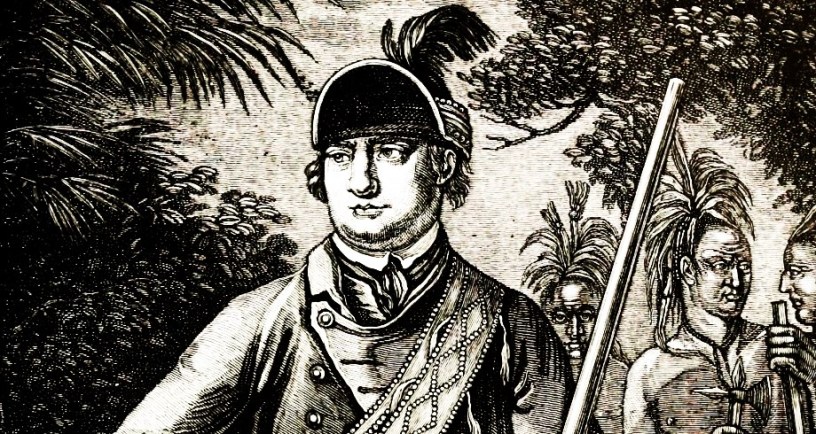
But it would be at Rogers’ Island that the rules of ranging would be written down as “Methods used in disciplining Rangers, with their manner of and practices in Scouting and Fighting in the Woods” for the benefit of Lord Loudoun by then Captain Robert Rogers.
Robert Rogers had been active in the field since 1755 and had led countless raids and intelligence gathering missions against the French forts at Ticonderoga and Crown Point. He had been commissioned to use his “best endeavours to distress the French and their allies, by sacking, burning, and destroying their houses, barns, barracks, canoes, battoes, &c. and by killing their cattle of every kind; and at all times to endeavour to way-lay, attack, and destroy their convoys of provisions by land and water, in any part of the country.” Rogers and his Rangers would become the best known irregular force of the war.
Now Lord Loudoun had a mission for him. He sent Rogers several gentleman volunteers from various regiments in the army. As Rogers relates in his journals, “Lord Loudoun sent the following volunteers in the regular troops, to be trained to the ranging, or wood-service, under my command and inspection; with particular orders to me to instruct them to the utmost of my power in the ranging-discipline, our methods of marching, retreating, ambushing, fighting, etc. that they might be the better qualified for any future services against the enemy we had to contend with, desiring me to take particular notice of each one’s behaviour, and to recommend them according to their several deserts.” The training began mid-September 1757 and lasted for seven weeks.
Upon completion of their training, they were granted ensigns commissions and either sent back to their parent units, or more often, to another unit. Twelve of the graduates obtained commissions in Rogers’ Rangers. Twenty-three others went into regular British regiments. It was in that capacity that they would become the cadre for the formation of the British light infantry companies to be formed in the British regiments later in the war.
Though the British commanders were originally planning to supplant the rangers by training their own light infantry, this never happened. The light infantry and rangers would be utilized together for the remainder of the war to assist in the eventual victory that would be realized by the British arms at Montreal in 1760.
Robert Rogers ranging rules were published in his Journals of Major Robert Rogers published initially in London in 1765, and later in Dublin in 1769 and 1770. There are 28 rules which deal with fighting on both the land and water, as the Rangers were active upon Lake George and Champlain as well. However, the letter Rogers wrote to Lord Loudoun is somewhat different than the published journal version. And they are significantly different than the ranging rules published today by the US Army and handed out to Ranger and Green Beret units. They were taken from the Kenneth Roberts novel Northwest Passage.
Rogers would also continue to train his men in irregular tactics even after the volunteers had graduated from his course. Another doctor, Caleb Rea, wrote in his journal on July 3, 1758, that his Massachusetts regiment “(exclusive of the men that were on Duty) Improved this Day chiefly in ye exercise of Bush Fiting which was (a) very pretty Diversion.”
He also later wrote on August 17 that “Major Rogers this Day excercised his men in Bush fiteing which drew a great Number out of ye Camp, to view them.”
As time when on the British would come to be better masters at this style of guerrilla warfare. Lieutenant Colonel William Amherst, brother to Major General Jeffery Amherst who was soon to become Commander-in-Chief of the British Army, wrote in his journal on June 18, 1758, while engaged in the Siege of Louisbourg, regarding lurking Natives that “the cowardice of these barbarians is so great & their arts in war so easily prevented from taking place, that it is astonishing they should ever have had an advantage over us, as in Mr. Braddock’s affair. Their whole dependence is upon a tree or a bush. You have nothing to do but to advance, & they will fly. They never stand an open fire or an attack. Our Irregulars and Light Infantry are certainly of great use, & should always accompany an Army in this country, as these troops drive them out of their shelter, harass them continually & treat them in their own way. The French have the desired opinion of our Irregulars, & they must not think any longer to frighten us with their Indians.”
 Fellowship & Fairydust