
BY T.J. GUILE
“Christ knitteth up all the whole matter with a very short substantial lesson: ‘If you know these things, blessed shall you be if you do these things.’ In which words our Saviour well declareth that the bliss of heaven will not be gotten by knowing of virtue but by the use and doing thereof. For as no man can come at Canterbury by the bare knowledge of the way thither if he will sit still at home, so by knowing the way to heaven, we can never the more come there but if we will walk therein.”[1]
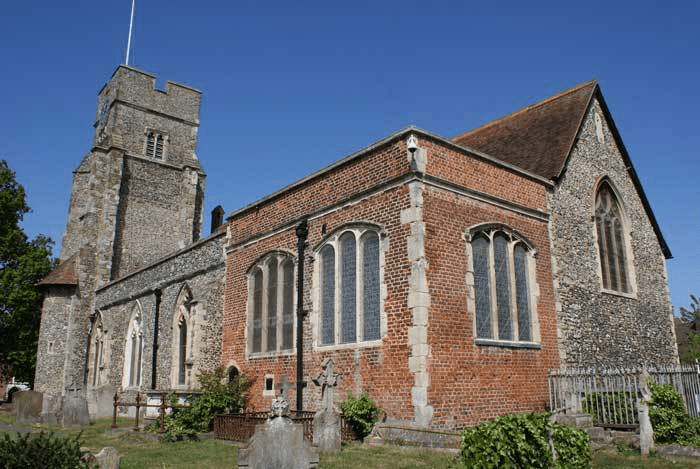
Perhaps, it was a deep sense of holiness that made Canterbury seem important in More’s mind when writing those sentences. That ecclesiastical importance came from its being the seat of the Archbishop of Canterbury, added to which was its role as England’s premier pilgrimage destination at the shrine of Thomas of Canterbury. The city was associated with St Augustine of Canterbury, St Mildred and St Alphege. The churches of St Dunstan’s to the west, St Mildred’s, which stood near the south gate of the city, and St Alphege’s towards Northgate, were all in existence by the Conquest and were all dedicated to saints with strong local connexions, two archbishops and the founder of the religious house on the Isle of Thanet at Minster; Mildred’s remains had been transferred to Canterbury in 1033. One might note that St Dunstan’s, dedicated to an early man of learning drawn into the contentious politics of his time, became a fitting a place for the head of Thomas More to lie.
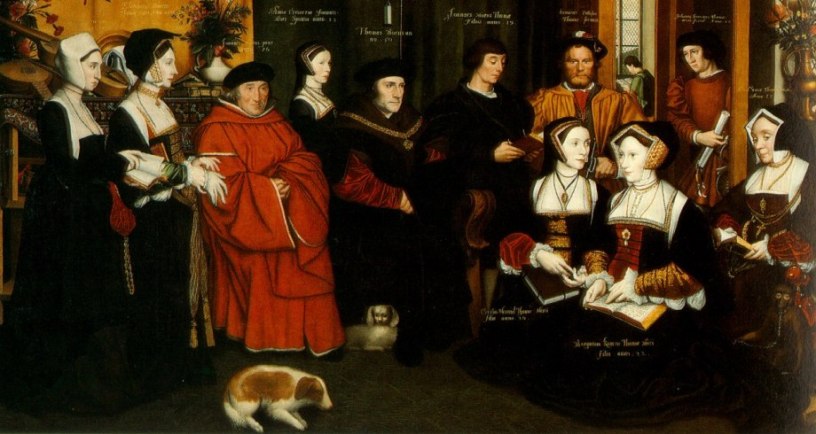
Sir Thomas More. Lord Chancellor of England, refused to acknowledge the king as Supreme Head of the Church of England, and the annulment of his marriage to Catherine of Aragon. After refusing to take the Oath of Supremacy. He opposed King Henry’s separation from the Catholic Church.
The moment that More and his family had long feared came on 12 April 1534 in the form of a summons to appear at Lambeth Palace to swear the Oath of Succession, which recognised Henry VIII and Anne Boleyn’s children as legitimate successors to the Crown and declared Princess Mary to be illegitimate. The next day, More stood before the King’s commissioners, including Cromwell and Cranmer, and declared that although he was willing to accept Henry’s new wife and the succession, he refused to swear the oath, the preamble to which also renounced papal power and affirmed the Royal Supremacy. More was arrested for his act of disloyalty to the King and imprisoned in the Tower along with John Fisher, Bishop of Rochester and active supporter of Katherine of Aragon, who had also refused to swear the Oath of Succession. His wife, Alice, visited him in the Tower of London and begged him to reconsider what he had done. It had no effect on Thomas More’s resolve to go with his convictions and his resolve to oppose the Henry VIII’s plans.
On 1 July 1535, Thomas More stood trial for treason, and he was condemned to death for ‘maliciously denying the royal Supremacy’. Five days later, while Henry hunted at Reading, More was beheaded on Tower Hill, proclaiming himself ‘the King’s good servant but God’s first’. He was beheaded at Tower Hill on 6 July 1535.
Thomas ascended the scaffold saying to his executioner, “I pray you, Mr Lieutenant, see me safe up, and for my coming down let me shift for myself.” Then he desired all the people assembled to pray for him, and to bear witness with him, that he should then suffer death in and for the faith of the holy Catholic Church. Having done so, he knelt, and after his prayers turned to the executioner and with a cheerful smile said to him, “Pluck up thy spirits, man and be not afraid of thine office, my neck is very short. Take heed thou shoot not awry for saving thine honesty.” [2]And with those final words, the axe fell.
In 1521, Margaret married William Roper, a pupil of Thomas More’s and who lodged with the family, Roper owned Well Hall in Eltham as well as property in St. Dunstan’s, Canterbury of which the gateway still stands. His brother Christopher Roper owned the Lodge, now called Lynsted Park as well as another house in Lynsted which has vanished. The Ropers made their home at Well Hall. Margaret was a highly educated young lady as Thomas More had insisted that all his children, both male and female, be as learned as they could be in the circumstances. Famous people such as Erasmus, the humanist thinker, stayed with the More family and mealtimes were opportunities for prayer and earnest discussions on matters of faith or current affairs. Margaret More was educated in Latin, Greek and other areas of knowledge and learning. At the age of nineteen, she translated from Latin to English, Erasmus’ study of the Lord’s Prayer ‘A Devout Treatise upon the Paternoster.’ It explained how a good Christian could learn from this prayer and how they should conduct themselves as a Catholic. It was the first translation of its kind printed in English and it sold all over England. While her name did not appear on it, it was clear to anyone who knew of Margaret’s reputation that it was her work.
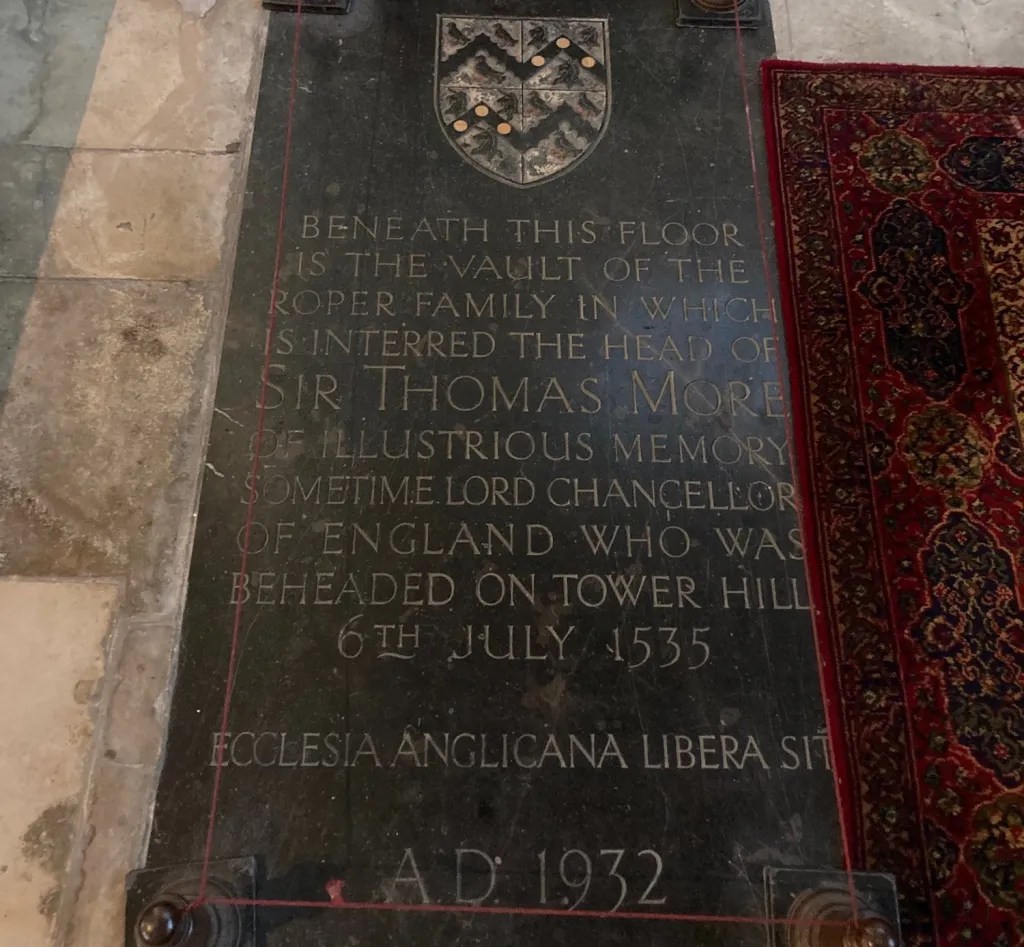
More’s hagiographer, Thomas Stapleton, writing in the 1580s, tells us that the head, by order of the king, was placed upon a stake on London Bridge, where it remained for nearly a month, until it had to be taken down to make room for other heads. The head would have been thrown into the river had not Margaret Roper, who had been watching carefully and waiting for the opportunity, bribed the executioner, whose office it was to remove the heads, and obtained possession of the sacred relic. There was no possibility of mistake, for she, with the help of others, had kept careful watch, and, moreover, there were signs so certain that anyone who had known him in life would have been able now to identify the head. Stapleton also says that up to her death in 1544, Margaret with her kept the head, preserved in spices. GK Chesterton said that there was a commonly held belief in Lynsted, an estate owned by the Roper family that Margaret Roper, the daughter of Sir Thomas More, carried the head of her father to Lynsted in a bag on the way to Canterbury. We may never know for sure what happened. It might have been at that time or later after the death of her eldest daughter, Elizabeth, Lady Bray, in 1558 or on the death of her husband William the same year that it was placed in the Roper vault under the Chapel of St. Nicholas in St. Dunstan’s, Canterbury.
What we do know though, is that their son, Thomas, had his mother’s body reinterred there. The inscription Hic iacet … Gulielmus Roper et Margareta uxor (here lie William Roper and Margaret his wife) can still be seen there. William, who survived her by thirty-three years, never remarried and honoured her memory by living a life devoted to learning, beneficence, and piety. The skull was set in a niche in the family vault. A skull ‘in a leaden box’ was seen in the vault of the chapel in 1715 and again in 1835 and was assumed to be his.
If it is indeed More’s head, there is the curiosity that one of the family thought it appropriate to bury him in a church which was, by the date his head arrived, committed to the Elizabethan settlement which he would have reviled, even if it is in a private family chapel. Whatever happened to his head, Saint Thomas More remains a shining example of fidelity and courage, standing almost alone against the actions of an evil tyrant much as his namesake Thomas Becket had done in 1170. But every year on 6 July, the date of St Thomas More’s execution, St Dunstan’s church holds a commemorative civic service, which is attended by the Lord Mayor, local Catholic clergy and members of the legal profession, with an address by a scholar, lawyer or public figure. All agree that they can unite behind, and cherish, the memory of St Thomas More, a man of courage and integrity.
Photographs
Sources
Fleming, A. The Female Tudor Scholar and Writer: The Life and Times of Margaret More. Roper, Pen and Sword, London, 2024.
Pentin, E. “The Case for Preserving and Exposing the Head Relic of St Thomas More.” edwardpentin.co.uk, https://edwardpentin.co.uk/the-case-for-preserving-and-exposing-the-head-relic-of-st-thomas-more/.
Roper, W. The Life and Times of Sir Thomas More. First Rate Publishers.
Footnotes
[1] More, T. Treatise upon the Passion.
[2] Roper, W. The Life and Times of Sir Thomas More, First Rate Publishers. William Roper was Thomas More’s son in law and his account appears to be an accurate one.
 Fellowship & Fairydust