
BY NOOR YUSSUF
The following is an extract from the children’s book Through the Blue Gate from the Adventures with the Awliya series by Noor Yusuf. It follows Jem, Mika, Munira and Hattie on their adventures into the stories and legends of the Awliya, the mystics and saints of Islam on their quests for the divine.
***
In barely an eye-blink, the children found themselves out in open land. To one side of them, there was a stretch of wall with overhanging tree branches. To the other side, there was a pale, rippling stream. “I wonder where we are,” said Mikael. The weather was warm, the surrounding land was verdant. They could be anywhere, really. “One way to find out,” said Jem. They walked slowly alongside the stream, following it as it flowed along. A trill of birdsong carried through the air.
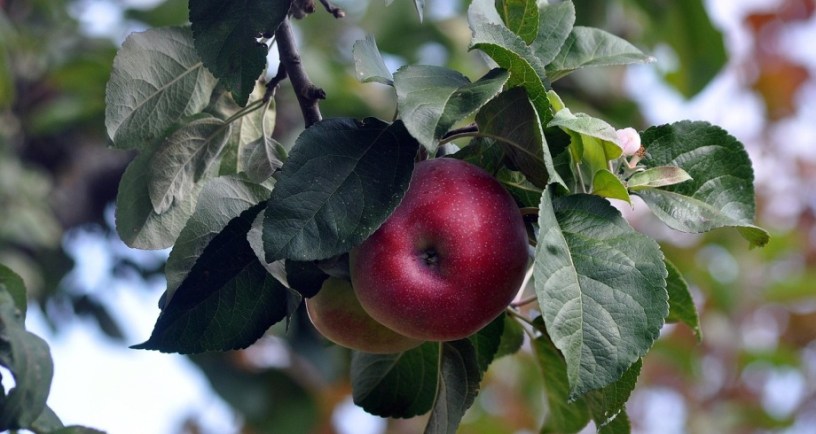
“What’s that over there?” said Munira, pointing to the water a little way ahead. At first, they thought it was just the play of light on the blue surface. But, no, there was something bobbing up and down, red and shiny. “It’s an apple,” said Hattie, a little surprised. “Maybe it fell off one of the trees,” suggested Jem. He picked up a fallen stick with splaying twigs and netted the apple towards them. “Looks like a bit like a caramel apple,” said Munira. She was right. It had the most lustrous, luscious, mouth-watering coat they had ever seen on an apple. “Looks like magic,” she added happily. The adventure was going to start with this, she just knew it. Maybe if she took a bite out of the magical apple, she’d get powers. “Right,” said Jem, “this looks quite good enough to eat. I don’t have a pocket-knife or anything, but we can each take a few bites.”
“Wait,” said Hattie, taking the apple. “I have a better idea. What if we took this back with us?” They stared at her blankly. “You know, like a souvenir. Or in our case – ” she nodded meaningfully at Mikael – “for research into the Mihrab.”
“How does an apple help us research the Mihrab?” asked Mikael. Hattie sighed and, for a moment, looked exasperated. “Mikael,” she said severely, “don’t you have any questions? You got a badge last year for ‘excellent investigative reasoning’ at the science fair! Just because there’s a few things you don’t understand, does that mean you’re not even going to try?”
“No!” said Mikael, defensively. But before he could continue, Jem interrupted him, “Oh come on, Hattie, why do you have to know everything? Why can’t you just enjoy the mystery for once?” To emphasise his point, he seized the apple back from her hands and was just about to take a bite when –
“STOP!”
All four of them turned around to see a man’s head rising from behind the stone wall. He looked very alarmed, “don’t eat that!” Jem lowered the apple from his mouth. Munira stiffened a little. The other side of a magic apple was, of course, a poisonous magic apple. Was that why he was stopping them? The rest of the man appeared as he climbed a ladder up the wall. He held out his palm. “I’d be grateful if you could return that,” he said. “It took me a very long time to grow.”
“Oh,” said Jem, a little embarrassed. He handed the apple into the man’s palm. “Sorry,” he mumbled, “didn’t know it belonged to anyone.” The man smiled, visibly relieved. “Don’t worry, my boy, I know all about that.” Munira looked at him curiously. She noticed something, now that he held the apple. It, sort of, glowed. And so did he. “Are you a gardener?” she asked. He let out a soft laugh. “I suppose so, after all this time,” he said. “If you are hungry, I do have some food here.” He sat on the wall and pulled the ladder over to their side, for them to climb up. “Just not the apples,” he winked. “I’m Abu Salih. It’s nice to meet you.”
Sitting on the wall, ready to climb down the other side, the children looked around in amazement. There were trees far and wide, all of them bursting with ripe, juicy apples in crimson, amber and bright green. Each was as polished and pristine as the next. It was a spectacular orchard. “Did you grow all of these trees?” said Mikael in wonder. “How long did it take?” Abu Salih looked around the orchard with a wan smile. “Years,” he said, “it took me years. And to think, it was all by accident.”
“Accident?” said Hattie. At the sight of their interested faces, Abu Salih invited them to sit on the grass. He disappeared a moment between the trees, then returned carrying a basketful of bread and a pitcher of water. Then he retrieved his ladder and began filling crates with the ripest fruits. “I never intended to be a gardener,” he said. “Once I was a younger man, on my way out into the world. I wandered through valleys, slept on the roadsides, learnt all sorts of things from sages and travelling teachers.”
“Were you going out to study?” asked Mikael. He had met someone a bit like this before. “Yes,” said Abu Salih, “to study, to find God. To learn the true lessons of life. In time, I came upon the Jayhun River and followed it upstream to wherever it arose. The stream outside, it flows to that river. I would have kept following it but I stopped to pray. I was tired and hungry – I hadn’t eaten properly in days. I thought to sit for some time in prayer and meditation. And that’s when I saw it.” He turned the bright apple over in his palm thoughtfully.
“You saw an apple?” asked Munira. “Not just any apple,” replied Abu Salih, “the most wonderful apple I had ever seen. It was like it had fallen from heaven’s bower. I was so hungry, I barely thought. I scooped it out of the water and ate it. Three days of hunger disappeared in an instant! But as it went, my wits came back to me. I realised it must have come from somewhere – it must have belonged to someone.”
Jem scrunched his nose. “If an apple is floating all the way down a stream, it’s probably quite fair to take.” But Abu Salih shook his head, “I have been taught to tell the truth. That includes myself. I ate it when it wasn’t mine. I had to repay its owner. Otherwise, what good would my quest have been?” Munira shuffled a little. She would have quite happily eaten the apple and not given it a second thought. Jem regarded Abu Salih. Something about this, about him, was familiar.
“So I walked upstream until I found this place,” said Abu Salih, spreading his arms to the surrounding trees. “Except it was a smaller orchard then. There was an older man tending to it: Master Sauma’i, the owner of these gardens. I asked his forgiveness for eating his produce without permission. I expected him to grant it – he seemed like a noble man. But that’s when a very strange look came over him. He said he would forgive me on one condition. That I produce for him exactly what I took: an apple of that very same quality.”
“But,” said Hattie, eyes darting over all over the branches, “to produce an apple, you’d have to grow a whole tree.” Abu Salih nodded, “And to produce that quality of an apple, I’d have to grow a whole orchard full. I had to learn the rotations, the seasons; how to till the soil, how to support a young tree; how to stave off the caterpillars and green flies; how to harvest at the right time, for each apple ripens in its own time. Pick it too soon and it’s sour and hard. Pick it too late and it’s worm-ridden and rotting. Each year’s crop brought its own lessons for the next.”
“That’s unbelievable!” gasped Hattie. “Those are unfair working conditions! It’s practically slave labour! All you did was eat one apple.” Abu Salih leant in. “One apple that took someone else years and years to produce. Half, maybe a whole decade of someone’s life, gone in minutes, without them even knowing.” He smiled understandingly at Hattie’s outrage. “At the time, I too thought it was an excessive condition. But I had come out to learn life’s truths. God put me in this place and put that instruction in Master Sauma’i’s heart. There’s always a reason, there’s always a logic, even if we don’t understand.” He paused.
For a moment, it didn’t seem as if he was talking about himself. They thought back to their argument by the stream. “As it turned out,” Abu Salih went on, “Master Sauma’i was right. It was a fair exchange. I have been here for twelve years. In that time, through just the act of gardening, I have learnt more about the world and myself than I ever dreamed I would. Some people learn about God through books, some through travel, some through hardships and joys. And wayward apple-pickers like me… well, we learn through taking something ordinary and realising that it is in fact extraordinary. This,” he circled the same shining apple from the stream in his hand, “this will be the repayment of my debt.”
The children gazed at the apple. The literal fruit of twelve years… and to think, they nearly ATE it! From the paths beyond the trees, they saw an older man walk towards them. Abu Salih stood up. “Salaam alaykum, Master Sauma’i,” he said. The children felt they should stand up too. They looked nervously at the crumbs of bread scattering the tray Abu Salih brought. Munira even tried to block it from view. Hard task master as he was, what if he made them stay for twelve years and grow a field of wheat?
To their surprise though, Master Sauma’i broke into a warm smile. “Alaykum salaam,” he said kindly, “and to you children too. Would you like some apples to take home?” The children stared at him, startled. Was this a test? But Abu Salih slipped them an easing smile, as if they were sharing a joke.
“Master,” he said, in a more serious tone, “I came to you once empty-handed, asking your forgiveness. Now I come, hands full, asking the same.” He bowed his head humbly and held out his palm. The apple shone like a red star. It was no ordinary fruit – it was as if it had absorbed all of Abu Salih’s patience and gentleness and hope. In fact, as they watched him, it seemed to look less like a star and more like his heart held in his hand.
Master Sauma’i took the apple into his own palm. “Very good,” he murmured, “very, very good. Son,” he said, “you had no need for forgiveness. That was not the reason I kept you here.” Abu Salih looked up, a little stunned. “I saw something in you when you came to me: your piety, your simplicity, your truthfulness. You were nearly ready, nearly perfect. You just needed a little more and that is why I kept you. As you watched the trees grow, I watched you grow. As you watered them, I watered you with prayer. In this whole garden,” Master Sauma’i gazed around himself, as did they all, taking in the sturdy trunks; the swaying boughs, the brilliant greens of the leaves and jewel-like apples. Master Sauma’i turned his gaze firmly back to Abu Salih. “In this whole magnificent orchard, the very finest fruit is you.”
Abu Salih bent his head lower. They saw the smallest of tears in his eyes. He whispered to himself over and over, barely audible, “Alhamdulillah.” Master Sauma’i handed the apple back to the overcome young man. “There is one more thing I would ask of you, before I release you,” he said. “I have a daughter, whom I wish to see wed and happy. I do not think there is any man worthy of her. You, however,” he fixed Abu Salih with a discerning eye, “you come very close. But, before you speak, there is one thing you should know. My daughter is deaf, blind, mute and paralysed.”
The children were taken aback. Even Abu Salih was astonished to hear this. For a good while he was speechless. He looked towards the trees. Twelve years. That’s how long he had worked, how much time had been taken from his quest. He could be free, his debt repaid, his conscience clear. He looked back. “Master Sauma’i, you have treated me well, you have allowed me to learn so much. You are a man of God, a descendant of the Holy Prophet, upon him peace.” Abu Salih took a deep breath, “We plan and Allah plans, but Allah is the best of planners. I could not have guessed what a single apple would teach me. I cannot dream to know how much more I could learn from such a woman. I accept, Sir.”
The children stood, quiet, subdued. They wouldn’t have thought to look at it like that. Yet, in all their conversation with Abu Salih, they realised he could find the silver lining in anything. He could take something small and make it large as life. He could turn something normal and ordinary into something extraordinary.
Something caught their gaze. Abu Salih looked up the path. A woman walked down. Her movements were graceful, she carried herself demure and elegant. She turned her veiled head, to listen to the birdsong as she walked. As she came close, they saw her smiling – a smile that reached her bright eyes. She was beautiful, yet it was a beauty they couldn’t quite place. It radiated out of her: a kindness, a sweetness, a light. “Peace be with you,” she said.
Abu Salih breathed out, “and with you.” Master Sauma’i nodded approvingly. “This is my daughter, Lady Fatima.” Everyone turned to him in surprise. “Ah,” he said. “When I said she was blind, I meant she has never seen anything wrong or ugly. When I said she was deaf, I meant she has never heard a harsh or evil word. When I said she was mute, I meant she has never spoken ill of anything or anyone. And when I said she was paralysed, I meant she has only ever done goodly acts. My dear,” he said lovingly, “this young man is Abu Salih.”
Abu Salih stepped forward, beaming. He held out his hand. On it rested the apple. “For you, my lady.” She smiled and took it. Jem, Mikael and Munira had a very strange feeling as they observed. There was something about Lady Fatima, something very familiar… They didn’t know what it was, but they felt like they knew her. Hattie nudged them, “maybe we should leave them to it,” she whispered with a grin.
The children began to back away but Abu Salih turned. “Please,” he said, “take something with you.” Master Sauma’i picked up four apples from one of the crates. “I would recommend,” he said quietly, so that only they heard, “that you eat them before you leave.” With a last knowing look, he directed them to a nearby gate.
“How romantic,” said Hattie, flushing, “I didn’t expect that to happen!” Munira nodded avidly, “didn’t she look a bit like a princess?” Jem and Mikael just glanced at each other and shrugged. “I can’t believe we nearly ate the price of freedom!” said Mikael, reflecting on the averted disaster. “Not to mention his engagement present!” added Hattie. “Right, cousins,” said Jem, looking around to make sure they were out of earshot, “… and Hattie. I assume we’ll be back at Madam Rifqa’s when we walk through that gate, so we’d better eat these quick.”
“Aren’t we taking one back?” asked Mikael. “Yes,” said Hattie. “But, just in case…” she took a big bite of the apple. The rest of them finished off their fruits, leaving only Hattie’s minus the bite. They tasted fantastic. With a final glance back at the happy couple framed beneath the orchard trees, the children stepped out of the gate and right back into the Mihrab.
***
This chapter recounts the story of the meeting of Abu Salih Musa Al-Hasani and Fatima Umm al-Khayr Al-Husayni, the noble parents of the greatest of all the Awliya Allah (Friends of God): Shaykh Abd al-Qadir al-Jilani.The story of the orchard is mentioned in the hagiographical accounts, and bears a striking resemblance to the Quranic narrative of the Prophet Musa (Moses) working for the Prophet Shuayb (Jethro) and marrying his daughter. The notion of service (khidma) being its own means to true knowledge (marifa) is explicitly noted in the Quran in what Musa says to Khadir: ‘may I follow (ie: serve and accompany) you, in order that you teach me some of the true guidance that you have been taught (directly by Allah)?’ (18:66)
 Fellowship & Fairydust