
BY MARTINA JURIČKOVÁ
Christmas, being one of the biggest holidays for both Christian and pre-Christian religions (no matter what you call them), is the most magical season of the year. And as such, a lot of different traditions are tied with them. In Slovakia, which is a predominantly Christian country, Christmas traditions are a combination of Christian and some old Slavic religious practices.
Slovak children believe that it is the little baby Jesus who brings them the gifts, which they open already on Christmas Eve (24 December) after a festive dinner. However, before they get to open them, there are a lot of preparations to be done and traditions to be observed. The preparation for Christmas starts in some households a couple of weeks ahead, very often even before the beginning of Advent. That includes not only buying the presents, cleaning the entire house, and decorating it, but mainly baking Christmas pastry. The most typical Christmas pastry, besides gingerbread, are vanilla rolls and dry cakes with jam. Some families even bake their own wafers.
Christmas Eve
In many families it is a custom to decorate the Christmas tree on the morning of Christmas Eve. Some parents like to set it up before the children wake up so that when they do, the tree is already miraculously there. Others make it a whole family event. Nowadays, however, many people opt to set the tree up some weeks earlier to be able to enjoy the atmosphere a while longer in this busy, rushed, and full of duties life.
It is somewhat similar with the cooking of the Christmas Eve dinner. Some people prefer to cook a day or two earlier, so that they can spend the whole Christmas Eve just decorating or watching fairy-tales with their children. The bigger traditionalists cook during Christmas Eve, which usually takes them almost the whole day, depending on what kind of meals the family members prefer. The meals vary from region to region. But the common thing is that many Slovak families, especially practicing Christians, still observe fasting during this day. It is believed that whoever abstains from food will see a golden pig at midnight. The golden pig is likely a metaphor for wealth; the food abstinence should bring to the person the next year, according to old sayings. Thus, adults are allowed to have only one full meal during the day before the festive dinner, but best none.
The Christmas Eve dinner starts at 6 PM. That is the time which priests recommend everyone in the parish to start it and thus create a kind of a spiritual unity across the whole parish as soon as the church bells ring. In my family it is a custom, though, to go to the cemetery before dinner and pray on the graves of those who cannot be with us anymore. The dinner typically starts with a prayer too (particularly, the Angelus), followed by a reading from the New Testament about the birth of Jesus Christ. Then the head of the family blesses everyone by drawing a cross on their foreheads with honey or holy water. In the past, the prayer was preceded by a house-blessing ritual most likely surviving from the pre-Christian times. This ritual consisted of the matriarch of the house, representing the good spirit of Christmas, knocking on the dining room door three times to be let in, reciting certain invocations. She was to be denied entrance two times and let in only on the third time. She carried a basket with all the food that was to be served before the main courses, mostly fruit, wafers, and nuts. She then pulled out of the basket some nuts and threw them over her shoulder into each corner of the room to scare away the evil spirits, protect the house and ensure its inhabitants good health and wealth in the next year. Afterwards, a dried carp scale was placed under the table cover to bring the family money. Some people even put a carp scale into their wallets for the same reason. Another custom that is being lost in many families now is the placing of an empty plate on the table for chance visitors. As Christmas is the time of hospitality, any wanderer unexpectedly entering a house was to be treated to the festive dinner as a member of the family. In some regions, the empty plate was, however, interpreted as being placed there in the memory of recently deceased family members.
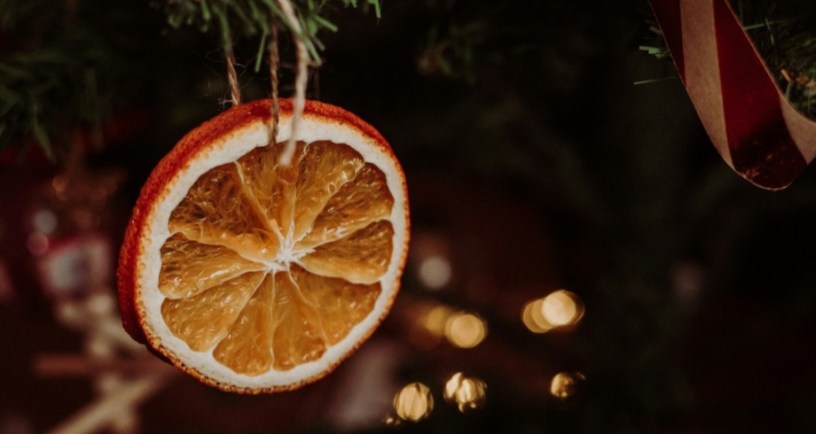
The appetizer stage of the dinner was full of symbolic meanings too. It typically starts with a toast to the occasion involving a shot of alcohol (often home brewed) followed by the sharing of fruit. Depending on what each family is used to including in this stage, each person at the dinner table gets a walnut or a peanut, a kiwi, and a piece of a tangerine, orange, and apple. Of course, in the past exotic fruits like kiwis, tangerines and oranges were not common in this part of the world, but nowadays as Christmas coincides with the time of their harvesting in the Southern European countries where they are grown and their import into Slovakia, they are easily accessible, frequently bought and thus considered Christmas fruits. With fruits consisting of multiple segments (like tangerines and oranges), one of each is shared equally among the family with each person receiving one or two segments of it, depending on the size of the fruit and the family. With apples, the approach can be twofold: either each member receives one whole apple, or one apple is cut into as many pieces as there are family members and each gets one part. Always though, the apple is cut in halves horizontally, so that the cut goes across the seeds. If the placement of the seeds in the cut is in the shape of a star, this signifies that the family or the apple holder would be happy and healthy next year. If the star is incomplete, a seed is missing in it, or the seeds are placed in the shape of a cross, it means that a disease or even death awaits them. If walnuts are consumed in this stage, their shells can also be used to foretell the future wellbeing of the family. Each family member picks a shell, places a small candle in it (like the ones used on birthday cakes), and all the shells are then put into a bowl of water and lit. The shells are supposed to huddle together then. If any shell stays apart from the others, it means the person who it belongs to will not be able to join the family next Christmas dinner, either because they will move away or some catastrophe would prevent them from doing so. Likewise, if a candle blows off or the shell sinks.
After the nuts and fruits, it is time for wafers. They are sweet, thin and oblong-shaped. Each family member receives two of these, spreads honey over them and sticks them together like a sandwich. Some people even eat a clove of garlic with the honey wafers. Both honey and garlic are supposed to make people healthy next year. Afterwards, some families even eat wafer rolls, which are basically the same wafers, just shaped into a hollow roll while they are being made. Others yet prefer the salty variety of wafers with cumin, which are usually smaller and round. The wafers are in some families followed by a dish known in different regions under different names (pupáčky, bobáľky, opekance). But it always consists of small pieces of soft sweetish pastry soaked in warm milk and covered with a mix of ground poppy seeds and sugar. Whoever doesn’t want to bake the pastry can use cut rolls instead. In some regions, a special sweet bread is eaten too. This is called a bishop’s bread.
When all the appetizers are finished with, there comes the soup and the main meal. Depending on the region, a typical Christmas soup can be a sour cabbage soup with pieces of sausages in it, a creamy mushroom soup, lentil soup, or fish soup. The main dish is some kind of fish with a potato salad. The traditional Christmas fish is a carp, which some families like to buy alive some days before the holidays, keep it in the bathtub for children’s entertainment, and self-kill it on the morning of Christmas Eve. Those, who don’t dare to do it themselves, can either get the fish killed right at the seller’s or buy an already frozen one. People who don’t like carp use their favourite kinds of fish instead, or just fish filets. No matter the kind of fish, this is then either baked or fried. And those who are not fans of fish at all, cook themselves schnitzels. As for the potato salad, this is made using 5 main ingredients: boiled potatoes, carrot, and peas, with the addition of pickled cucumbers and tartar sauce. The vegetable is chopped into small pieces and salted and peppered according to taste. Some people even add chopped onion or a bit of vinegar in it, and the more experimental ones even add pickled corn or olives.
An important thing to remember is that during the whole dinner, no one can leave the table, not even for the toilet, otherwise he would not return to it the next year but die. Also, nothing eaten during the dinner should come to waste, so that if people did not manage to finish their dishes or left behind some crumbs, these leftovers were collected to be given to animals after the dinner. The magical power of the Christmas dinner foods was believed to protect even the livestock from diseases the next year.
The dinner is finished with another round of alcohol shots and a thanks-giving prayer. Then the whole family moves into the room with the Christmas tree where there are already presents underneath. The parents secretly managed to put these gifts there shortly before the dinner, while children were getting ready for the meal (for example, washing their hands). Or people who did not believe in the old superstitions about the consequences of leaving the dinner table, went out of the dining room under some pretence (to get something they need, to check the fire in the fireplace…) and did it during that time. In some families, it is a custom to prepare everything before the children wake up on Christmas Eve day and lock the room with the tree from them until after dinner. Some young parents, especially those who do not go to midnight mass, under the influence of American films are nowadays starting to make the kids wait the night out and let them see and open the presents only the next morning. The traditional families open the present right after the Christmas Eve dinner, though, and then play or chat together, stuff on cakes and pastry, or watch TV. Practicing Christians then go to a midnight mass.
There are a number of old traditions related to Christmas Eve day worth mentioning here, even though they are no longer often observed. For example, in the past it was forbidden to hang out a batch of washed clothes to dry out on this day lest the person it belonged to would die. The breaking of dishes on this day also foretold a death in the family. To hold the family together, in some regions they used to tie the legs of the dinner table with chains and the dinner eater had to have their feet placed inside this chain square. Placing a sharp metal, such as an axe or a knife, under the table should have provided the family with sharp wits and good health, and placing straw underneath to remind the family that Jesus was born in such poor conditions in Bethlehem.
Girls used to foretell their love destiny in various ways on this day. They could throw a shoe over their shoulder and if it landed with the front of the shoe towards the door, the marriage was near. Or they could stand in an outside gate or entrance door eating an apple, and if the first person they met then was a man, again it foreshadowed a near marriage. Some used to shake a fruit tree in their gardens and the direction from where they heard a dog bark was to be the direction their husband would be from.
In some regions it was believed that all baking should be finished before dawn on Christmas Eve day. Bakers used to clean their dough-dirty hands on fruit trees in order to make the trees powerful so they would have a lot of produce the next year. Likewise, bits of the dough were fed to hens to make them strong enough to lay many eggs. Freshly baked pastry was ritually broken over a not-yet-speaking toddlers to symbolically break their muteness and over calving cows to make their births easy. If you needed to sweep the house, you had to do it before sunset and always sweep the broom in a direction from the entrance door inside in order not to sweep the good fortune out of the house. Men also used to bury a mistletoe under barn doors as a protection against witches and hang fir branches on the door as a protection from storms. In some regions, farmers used to bake a ceremonial bread called Kračún, after an old Slavic god. This was placed on the table with a bunch of wheat put in its hollow middle and remained there until after the New Year’s day. The wheat was then in spring used to begin and bless the sowing season.
Christmas Day and Saint Steven’s Day (25 and 26 December)
On this day, in the morning families go to a mass again. Lunch typically consists of yesterday’s leftovers (like probably the rest of the week due to the amount of food made). The afternoon is reserved for visiting relatives. Children go carolling either on one of these two days or then on the Epiphany day in January, depending on what is the most common custom in a given region.
As for old traditions, in the past one person from a family had to go and get a bucket of water from a river in the early morning. Each member of the family from the youngest to the oldest threw in it either a coin or an apple and then they washed in it. Afterwards, the waste water was spilled in the garden under fruit trees and near the livestock’s houses to make them healthy and well-thriving. The cattle were also whipped with green wattles to bless it with health the next year.
Saint Steven’s Day was reserved for visiting friends and for the first village ball. The tradition of Steven’s dance parties is still very popular. On this day, women used to bring their godchildren special cakes as a sign of blessing them. Maidens washed their feet in the river in the promise of retaining their purity next year and in the hope of being healthy. Young lads used to sprinkle their horses with oats to ensure they would be strong and fat.
New Year’s Eve and New Year’s Day
New Year’s Eve was marked by the performance of many rituals that were supposed to get people rid of evil spirits and bring a good new year. The evil spirits were being driven out of the village by making a lot of noise, either by shooting guns, cracking whips, or singing. That is probably where the tradition of New Year’s fireworks originated from—they were intended to make noise and light flashes to scare the witches away. The year usually ended with a similar dinner like on Christmas Eve.
In some regions, people used to dress in masks of poultry with straw tied to them. They went from house to house blessing the household with dancing and singing. The owners of the house could take a bit from their straw and put it in their chicken houses to make their hens lay well the next year, and in turn they awarded the masked people with cakes.
On New Year’s Day, a similar washing tradition was observed as on Christmas Day. Since it was believed that “like on New Year, like for the rest of the year,” people were discouraged from arguing, crying, or displaying any negative emotions lest they would be cranky and on unfriendly terms with their relatives the whole year. Washing clothes and sewing were also forbidden. Accepting visitors was also a sign of bad omen, unless they were carolling boys or a visitor brought some gifts.
The Epiphany (6 January)
The Epiphany was known for the carolling imitating the visit of the Three Wise Men in Bethlehem. Three boys dressed as them, accompanied by other boys carrying a nativity scene or playing musical instruments, used to go house to house singing carols, for which they usually received some cakes, pies or other sweets, or a little money.
Also, priests go to bless houses that asked for it. They sprinkle holy water in each room of a house, praying, and then write the letters GMB and the current year above the entrance door. Laically, these letters were interpreted as being the initials of the Three Wise Men, but the truth is that the first letter is not G but C and the acronym then stands for the Latin phrase Christus Mansionem Benedicat = “Christ Blesses this House.”
Epiphany marks the period of merry-making known as fašiangy, which lasts until Ash Wednesday. It is a season of dancing balls and masked carnivals.

 Fellowship & Fairydust