
BY ANNE AMMUNDSEN
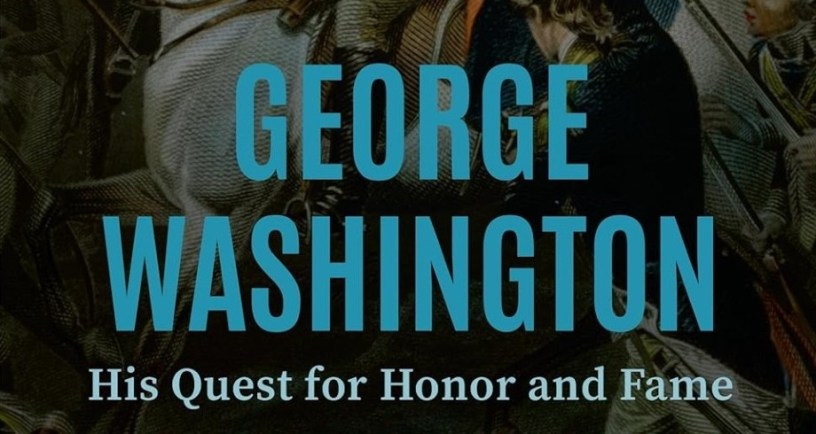
George Washington: His Quest for Honor and Fameby Peter R. Henriques. University of Virginia Press, 2025. Hardcover, 176 pages.
This book closely resembles Peter R. Henriques’ earlier work, First and Always: A New Portrait of George Washington (University of Virginia Press, 2020), in which the author explores both the admirable and controversial aspects of Washington’s life. In that earlier book, Henriques devoted an entire chapter to the Asgill Affair and, in a subsequent presentation, judged Washington’s decision to select an innocent 20-year-old British officer for execution as retaliation a “serious misjudgment”—a remarkably restrained assessment of this episode. Indeed, the affair represented one of the most serious challenges to Washington’s reputation during the Revolutionary War and sparked America’s first international diplomatic crisis, ultimately requiring the intervention of King Louis XVI to secure Captain Charles Asgill’s release.
It is therefore extraordinary—given the book’s stated focus on Washington’s self-fashioning—that Henriques does not even give a passing mention to the Asgill Affair in this later book, which purports to examine Washington’s lifelong effort to shape and sanitise his legacy.
What demands scrutiny is Washington’s overriding concern during these events of 1782: how the world would judge his violation of the 14th Article of Capitulation, which guaranteed the protection of prisoners of war. While awaiting his expected execution, Asgill was imprisoned under close arrest in a tavern populated by hostile and angry revolutionaries. Although Washington instructed Colonel Elias Dayton to treat Asgill with “every tender attention and politeness,” these orders were either ignored or unknown to those guarding him. According to Asgill’s own testimony, he was repeatedly abused and beaten, at one point sustaining injuries so severe that he nearly died. Washington was fully aware of these conditions. Asgill wrote several desperate letters pleading for relief—letters Washington later excluded from the papers he prepared for publication.
In 2019, Asgill’s own account of these events finally appeared when his long-suppressed 20 December 1786 letter to the New Haven Gazette was published for the first time. Written in response to Washington’s public version of events, Asgill sought to correct damaging falsehoods that had circulated throughout Europe. He denied claims that he had been led thrice to the gallows or that a gibbet had been erected outside his window, and he rejected the insinuation that he himself had spread these rumours. They had been circulating months before his release, when he was still imprisoned and powerless to speak publicly.
Washington’s portrayal of Asgill—by omission and insinuation—cast the victim as a liar and malcontent, a slur that endured for two-and-a-half centuries. Correspondence between Washington and his former aide, David Humphreys, reveals a deliberate effort to “devise” a public defense of Washington’s conduct. That choice of word alone strongly suggests careful manipulation rather than transparency.
By omitting the Asgill Affair entirely and without addressing the facts outlined here Henriques misses a crucial opportunity to confront another instance of Washington’s determination to appear flawless to posterity—even at the expense of an innocent man.
Anne Ammundsen is the author of The Charles Asgill Affair: Setting the Record Straight (Heritage Books, 2023). Read a Fellowship & Fairydust interview with Avellina Balestri of her research at “Interview with Historical Researcher & Author, Anne Ammundsen.”
 Fellowship & Fairydust