
BY THE TRAVELING TROUBADOR
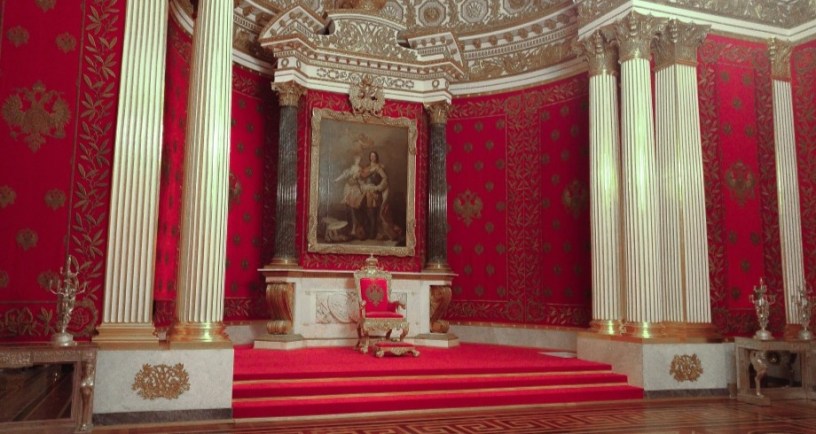
Throughout the ages, there have been countless earthly empires headed by distinguished dynasties that passed down their sovereignty by way of lineage. They were led by powerful kings and influential queens, as well as princes and princesses, trained as heirs to command armies and foster diplomacy. Many were also raised to learn courtly etiquette and the fine arts, such as the playing of music and recitation of literature. It was customary for them to be garbed in illustrious regalia, befitting their importance and generational status. We envision the exhibition of these royals as they displayed their luxurious lifestyle, garbed in royal robes of crimson and purple, woven from exceedingly expensive fabrics of velvet, satin, and silk.
These garments were often adorned with pure spun gold and silver threaded embroidery, trimmed with rare furs like ermine, and glittering with other ornamentations including exquisite jewels, including diamonds, emeralds, sapphires, and rubies. In Christendom, the magnificent crowns that they wore were often topped with a cross, putting accumulated vanities secondary to the proclamation of Christianity. Although privileged, the responsibilities and societal pressures of the royals were multitudinous, making their plight of inheritance a mixed blessing, as it was aptly coined by Henry IV in the immortal Shakespeare’s play: “Uneasy is the head that wears the crown!”
These authoritative figures living in grandeur, perched upon their ornate thrones, must have resembled proud peacocks spreading their exotic iridescent feathers wide in a grand theatrical display. With their bejeweled scepters in hand, many believed that they were nearly godlike and destined to imprint their indelible legacies unto posterity. From that elevated vantage point, they presided over their kingdom’s loyal and disloyal subjects alike, meting out swift and brutal punishment to any who dared dispute their authority. It was nearly impossible to challenge or overrule their disciplinary decisions or to have high hopes that one of his taxation taskmaster magistrates would suddenly be tearfully touched and rule in your favor over that of his sovereign lord.
Yet there has been a continual thread through the centuries connecting God-fearing royals who distinguished themselves from those corrupted by their own power. They have been sewn into the same unifying tapestry by the will of the Holy Spirit’s wisdom. By accepting that they were all called to uphold the obligation of the noble, they centered their vocation on undying faith, hope and charity, pouring themselves out in service to mankind. It would take supernatural inspiration to voluntarily relinquish all the niceties given them and evacuate their plush palaces and positions to descend to the rank and file of the peasantry whose plight was often in a pitiful state lacking the basic sustenance for survival. They did their utmost to be honorable and to serve as just and fair intermediaries between the Almighty and humanity by taking the Lord’s Prayer seriously: “Thy will be done, on earth as it is in Heaven!”
Their spiritual calling caused them to courageously choose the narrow path to paradise. They descended from high elevations of prosperity by releasing themselves from the bondage of temporal comfort and privilege. They chose to respond to the grace given to them and become gallant crusaders of mercy. They sought holiness by embracing the Holy Cross of Christ and carrying it up the sacrificial rock-strewn hill of Calvary. To this end, they lived a penitential life of body, mind, and spirit, believing that those who would be greatest should act as servants before all. Their sights were set far above the bounds of class and culture, and sometimes set them at odds with their own royal houses.
One such exemplary figure of spiritual fortitude was Prince Casimir of Poland, who would later become the country’s beloved patron saint. Living in the 15th century, he was a highly educated and intellectual young man, yet most importantly, he embraced true humility and strove for justice and fairness towards his people. He embodied grace-filled sanctity, and was a beacon of pious clarity and conviction, reflecting the graces of God’s eternal light by choosing to bow to the heavenly throne over the throne of man.
Since he came from a long lineage of royalty, with his dutiful father, Casimir IV, ruling as King of Poland, and his loving mother Elisabeth as his Queen, he was expected someday to follow in their footsteps and wear the crown. Although he had a great interest in brokering peace between countries through diplomacy, he had little desire to attain victories on the battlefield. As a young prince, Casmir became head of the realm for several years out of obedience to father who had to leave the country to attend to his responsibilities as Grand Duke of Lithuania. Casimir ruled with a compassionate and conscientious and justice that was greatly admired in the eyes of those citizens under his dominion.
He was of a gentle disposition, well-schooled in the teachings of Catholicism, and unmovable in his determination to please the Lord of Heaven and Earth. In spite of his rank, he yearned for an austere life, and had no taste for possessing wealth and worldly powers. He undertook various severe disciplines, and cherished his moments of solitude. He would pray through many hours of the night, meditating on the Passion of Christ. When he finally rested out of exhaustion, he slept on the hard floor rather than a comfortable featherbed, offering it up for the poor souls in Purgatory.
Harboring a sincere affection for and deep devotion to the Mother of God, he sang an ancient hymn, “Daily, Daily Sing to Mary”, every morning as the sun rose. He then would head to the cathedral before the mass began and kneel on the ground outside the doors, in adoration of the Eucharist which was soon to be celebrated. His serene countenance while in awe and veneration was sublime. His generosity was a blessing to the poor who crossed his path, and he engaged in numerous good works of charitable almsgiving, placing special emphasis on, and offering earnest empathy for, those who were sickly. Another penitential practice that he undertook in addition to his constant prayers, fasting, and enduring persecution from those in the courtly mindset, was by wearing a coarse animal hair shirt under his unusually plain clothed outer garment. It was extremely irritating to his skin, causing rashes and blisters. Also in imitation of his Master, he took a vow of perpetual chastity, dedicating himself to lifelong purity of body and soul.
This scourge of consumption, also known as tuberculosis, was dreaded as “the white plague” due to the paleness of the skin of those who contracted it. Those stricken had to fight for every breath, and their condition deteriorated at a rapid, and progressively painful, pace. Casimir tragically contracted this agonizing affliction. During the Middle Ages, it was believed that God gave the power of healing touch to the true line of royalty, but it wasn’t his fate to receive it himself. One wonders if he perhaps caught the fatal disease from carrying out that very custom on behalf of those among his flock who were helplessly and hopelessly inflicted. Even when he was wracked in agony, he endured the suffering with an gracious acceptance of the Almighty’s will and continued his sacrificial obligations as an instrument of love. At last, his life ebbed away on March 4, 1484. He was only 23 years of age.
Through Casmir, providence presented the world with a briefly flickering candle, shining the light of true selfless love through his virtuous life and long-suffering faithfulness. Yet the eternal flame of his resilient devotion will never be extinguished. After five hundred years, his example of piety remains hallowed in the hearts of the Polish people as a brilliant beacon of spiritual hopefulness in a world of strife and darkness. His tomb became a shrine famous for many miracles, and he was canonized in 1522. He is also the patron of the Knights of St. John and is invoked against the enemies of the faith and Poland. When his mortal remains were exhumed to be moved to a chapel being built in his honor 120 years after his death, they were found by the Vatican’s ecclesiastical authorities to be intact and incorrupt. A parchment of his favorite devotional hymn, “Omni die dic Mariae”, was also discovered within the casket. Thereafter it became widely known as “The Prayer of Saint Casimir.”
The essence and focus of Casimir’s loyalty was centered on the steadfast commitment of serving Christ’s Kingdom above the kingdoms of men. This author was born into the “Faith of Our Fathers”, with Catholic ancestry on both his paternal and maternal sides, including a quarter slice of Polish heritage. He was christened on Sunday March 4 at The Church of the Madonna. As providence would have it, this was the Feast Day of Saint Casimir, the Pious Polish Prince.
Saint Casimir, pray for us!
 Fellowship & Fairydust