
BY ANDY DIBBLE
Content warning: torture
When the messenger told me his king was about to be a father, I offered my congratulations. But I did not agree to read the princeling’s karma.
The messenger’s own karma hung from his shoulders, light and clear. Tracing its weave, I knew he lived a past life in a heaven full of geese and stars. He wore a turban of fine bright linen. His beard was trimmed, his motions practiced.
King Shuddhodana had not shamed me by sending a lowly courier. On another day, I would have considered his request. But today, I was on a hunt.
“Asita, you are a reasonable man, a sage. Perhaps we can come to some agreement? The king has a rather singular son,” said the messenger.
“Not unless you know the whereabouts of a demon named Tamisra.” I’d spotted her some weeks ago. Since, I pursued her through the lawless tracks of the forest, the topless Himalaya, and flying the paths of the air. But still she evaded me. I meant to return her to hell.
“There is a woman by that name in the prisons of Kapilavatsu.”
“Truly?”
“Yes. The king charges me with knowing all the goings-on of his palace.”
“What crime did she commit?”
He looked at me strangely. Must everyone believe the sage Asita divines truth effortlessly, like a swan separates water from mud? “She plowed the fields of four families with salt and castrated the court astrologer.”
Crimes of infertility. She must be the Tamisra I sought. “If I could speak with your prisoner, I’d be glad to read the prince’s karma.”
The messenger agreed at once. Why shouldn’t he? Greater kings than Shuddhodana paid handsomely for my readings.
I needed to determine how Tamisra had escaped hell. Other demons might exploit her method too. She could be the first of an invasion.
But on the way, the coincidence struck me. Shuddhodana’s soldiers snared precisely the demon I sought. And just as his messenger had reason to visit me?
How strange. Sometimes karma surprises even me.
#
The prison was dank pens with stolid wooden bars and coarse earth. Prisoners crouched in the vault of gloom near the walls. There was a line of bronze pinchers, forks, and saws against the wall nearest the whipping pole. A grim place, and chilly. But my stay would not be long.
To mundane eyes, Tamisra appeared no more demonic than any other woman. But my eyes saw her karma, wound around her, like lianas strangling a tree. It was black and blistered by lifetimes in hell. Demon karma. I saw this as surely as the mundane eye ogles charred flesh.
“How did you escape hell?” I said through the bars.
Tamisra emerged from the back of her cell, haughty as black Kali crushing a god underfoot. “When I was born.”
How could one with such ruined karma throw off her demon lives and achieve rebirth as a human? I squinted to better reckon her karma. By the layered mess of scar tissue, Tamisra suffered long in hell, one hundred lifetimes at least. If after such a mangled garland of lives, she finally clinched a precious human birth, her present crimes would doubtlessly plunge her in hell again. I could almost pity her.
But I knew she was lying. “No, I think you escaped with the new moon.” In which case she possessed some poor woman—or the corpse of one. That’s why I spied just one karmic accretion, not two. Without a host, nothing bound her to the middle realms of men. The sun and moon would conspire with her foul karma. She would still be in hell.
“You asked. And I told you the truth.”
“I do not believe one trapped in hell so long could be reborn as a human.”
She chuckled. “I see my karma better than you, great sage. For karma is subtle in its recompenses. Karma revealed itself to me, so I’d know the eons I suffered, rebirth after rebirth. So that I would see and despair.” She smiled wanly. “Do you know what hell was like for me?”
“I have seen hell in others’ karma.”
“An image of a thing is not the thing, Asita. And you did not answer my question.”
“Tell me of your hell, then.”
“In a past world-cycle, I was born in a colossal pot of boiling oil, so huge one plunges downward for a thousand years and tumbles upward a thousand more, buffeted by convection.” She shivered, a torch flame tugged by wind. “The oil was just half my hell. The other half was anger, impotent rage against every sentient being imagined or real, anyone that roused hate in me and thereby fouled my karma. I imagined effigies of them, all of them, swirling in the oil, their insides flayed as mine were, invading every orifice, killing me, birthing me again, reforming me like wax.”
How gullible does she think I am? A boiling oil hell? There could never be a pot so huge. To think cookery could be a fixture of the universe! But she is contained and marked for execution. What is the harm in letting her prattle on?
“But there was one mercy. Once every two thousand years, for a single breath, my head broke the surface. I could cry out a word—a name, a plea—before plunging down again into the heaving vat. So I did what I could. I cried for help, screaming the name ‘Dipankara’ with my one breath and two thousand years later crying out ‘Kashyapa’ and two thousand years later ‘Vipashyin’: divine names, names of omniscient buddhas. One of them would take pity on me eventually.”
“A buddha pitied you? You?”
She ignored my jibe. “And so I was swept around, coveting a name as I rose higher and higher to the zenith of my hell. I sucked air and managed, ‘Avalok—’, but the undertow pulled me under. A wasted chance! Two thousand years to botch a name! I managed only three rushed syllables that could not be the name of anyone. But through the agony, I considered the no-one I invoked. How wonderful it must be to be Avalok, he who was never born and could never suffer what I have suffered.”
“You must have envied him.”
“No!” She struck the bars hard with negation. “It was compassion that saved me. I considered how liberating it would be for me, for all my compatriots in all the hells, if we were never born, for all beings in all the worlds to never be born. That is how I escaped ten-thousand births in hell.”
This act was quite overdone. “You’ve had your fun. No moment of fellow-feeling, of compassion, could free you from an absurd hell.”
She smiled like a guest tolerating the child of her host.
“Next you will tell me that you castrated the king’s astrologer because of the love you bear for the children he will never conceive.”
Tamisra’s smile was the last sliver of an eclipsing moon. “If I speak truth, may you see the buddha of this age but not live to hear his teaching.”
#
She had tried to curse me, or aped at cursing. That must be the end of all civil discussion. I turned on my heel and left.
Next to see the king. There was a young man with tight white lips and dark eyes on his way down the sunlit stairs leading from the prison. He gripped a many-tailed whip. His karma flailed like a burning viper.
But the lambent glow of his prior lives tickled me. I traced the karmic fibers and marveled at the change. Eighteen lives ago he was a king of kings, turning the wheel of empire over all the lands of men. Everything the noonday sun touched was his domain. In the life before that, he reposed twenty-thousand years in the Tushita heaven. Once, long ago, he ruled a herd of four-thousand elephants, trumpeting in the foothills of the Vindhya mountains, confounding poachers who sought his opal tusks. At the limit of my sight, I puzzled out a brief life in which he was a selfless hare, who roasted his own flesh to feed a starving child. The blisters of hell no where marked his karma.
“Let me pass,” he growled, yanking my attention to the present. And whirling back, I saw the livid gash in his karma, where rage kindled. It was not long ago, no more than a moon.
The weave of his dhoti was fine. A sacred thread crossed his bare chest. Tattooed star charts wound over his arms. I thought him Viplava, king Shuddhodana’s court astrologer. Meaning he was the man Tamisra had castrated.
“My errand is urgent,” he said, not so hot as before. No doubt, his errand was whatever sorry business that whip was for.
“Viplava?” I said.
“And you?”
“Asita.”
Tamisra said I would see the Buddha. Him? Perhaps she preys on those that tread the path toward buddha-hood? She just guessed he and I would meet, and I would see the seed of final enlightenment in him and know that she plucked it out by souring him with rage.
“It shames me not to have recognized you,” said Viplava. He pressed his palms together and bowed.
I greeted him likewise. “And it shames me not to have met you sooner.” Until now, I associated his name with the wry joke: Doomseer Viplava is so keen to spell disaster, he predicted nine of the last three demon invasions. But seeing his karma—pure save the recent enmity—I knew that joke was vicious gossip.
I would pry, but carefully. “Your errand—it requires a whip?”
“Ah.” He let the whip dangle behind him. “King Shuddhodana sentenced a prisoner to five lashings every day until her execution.” His many-tailed whip glint with iron barbs, to make every lashing count.
Viplava continued, “But the king has a son today.” His karma hissed and burst into envious conflagration. Such a shame to see brute fury gorge upon his sterling pedigree of lives. “The king’s joy does not permit him to order his jailers to punish anyone. So the duty falls on me.”
“We are brahmin,” I said simply. “The rod of punishment is not our burden.”
“A demon-hunting sage questions whether a brahmin may do the duty of a warrior?”
“I hunt demons to uplift the kingdoms of men, to end mayhem.”
“And I do justice.” He was sincere. And, I thought, a little mad. “We are more alike than you think, Asita.”
“Forgive me. I was only surprised. Come, Viplava, let us go congratulate the king on this happy day. A son and an heir!”
But Viplava would not be distracted. “You go ahead. I will join you in the assembly hall when I’m through.”
“If you mean to meet Tamisra, she is wily, powerful. We’d best go together.”
He paused only a moment before relenting, “Then come. You’ve seen sights more gruesome in some life.”
But why, I wondered, must I see them again?
#
Tamisra was bound to a post at the center of the prison. The wood beneath her wrists was smooth from the hand oils of many penitents.
The guard Chandaka stood as equanimitously as the whipping pole. Tamisra eyed him warily. Chandaka’s hands were callused and speckled with burn marks. The calluses had broken here and there into blisters.
I could guess why. He held the knotted whips, the hot tongs, the scalding oils. Any other day, he would be Tamisra’s punisher.
His karma bore the calluses but no blisters. Torture was his duty, and he did his duty with detachment, so his karma grew tough and woody. To him, suffering is essential to life, to all lives, like saltiness to salt.
Tamisra paid Viplava no mind, though he loomed at her back like the god of death. To her, Viplava’s wrath was just nature, as certain as a thing foretold. She castrated him, so he seeks revenge. Malice begets punishment. Karma produces its like.
But she acknowledged me. “If you’re with him, your grasp of karma is even poorer than I thought, Asita.”
“Don’t mind her,” said Viplava.
Tamisra went on, not speaking to anyone in particular. “In another life of mine, long ago, there was another that tried to whip me. Passion seized him but he froze before bringing the lash down, stayed without twitching. He breathed several long breaths before I found the courage to ask why.”
Viplava snarled and in one motion furrowed bloody lines in her back.
Tamisra bit back a scream. “Don’t you want to know what he said?”
“No talk.” Viplava’s whip-arm reared like a cobra.
“What did he say?” I said.
Tamisra chuckled. “‘I’m punishing an angry man.’”
Viplava cracked the whip against her back with a snarl. Tamisra’s back arched like a cat’s. She bit back her scream again.
Another lash, one she couldn’t anticipate. Tamisra shrieked and pain silhouetted her karma but, like green wood, nothing kindled. Resentment didn’t singe her karma. But it rode this peerless man, Viplava?
But what in karma is just? Karma is fortune’s wheel. We ride it up and down again, and maybe never up again.
Another lash, another scream, another and another. That exceeded the five king Shuddhodana prescribed.
“Think of your karma, Viplava!” I said.
He whirled on me, brandishing the whip. He was a different man, more demon than man. “This is justice.”
Only my knowledge of his better self lent me the courage to speak. “If not for your sake, then for the king’s. Do not stain the day he became a father with ugliness.”
“Salt her wounds.” Viplava shoved the whip in Chandaka’s hand. “I’ll return tomorrow.”
#
As Viplava and I approached the king’s assembly hall, I took small solace knowing the astrologer bathed. Rage doesn’t wash off. He didn’t show it, but what fool seethes in front of his king? Looking deeper, I plumbed heat, like Tamisra’s hell, swirling oil, imagined effigies, paroxysms of rage, rage begetting rage. I must confront him, as one man to another, or his resentment would surely drive him to hell in his next life or one not far off.
But now it was impossible. The assembly hall of the king stretched before us. Brocade drapes studded with beryl and moonstone hung between pillars of tawny sandalwood. Tapestries of demon armies washing futilely against brilliant formations of chariots overlaid the lacquered walls on either side. Smoke from the sacrificial fire wafted in so the newborn prince would breathe it and live one-hundred autumns. In the center of the court was the king’s throne cast in the likenesses of the horse-headed Ashvins, the twin sons of the sun.
Ministers and attendant sages chattered about the newborn prince like monkeys in a banyan tree. One faction of sages prognosticated that he would be an emperor, conquer all the kingdoms of the world, and rule them justly. A second faction assured king Shuddhodana that the prince would renounce worldly life, attain enlightenment as a buddha, teach others, and liberate multitudes from birth and death.
“Viplava and Asita have come,” said the king. “They must see prince Siddhartha.”
The chattering cut-off. The sages and ministers drew back, revealing the king on his throne.
In his lap was the softly sleeping prince. Siddhartha glowed golden as the cosmic mountain Meru. Delicate webbing spanned his fingers. The soles of his darling feet were arched like a heavenly dancer’s and emblazoned with wheel-emblems. The curl on his brow glowed like a star plucked from the bosom of the night. His eyes were agate-blue and limpid as a gazelle’s. In expression, he was as austere as Tamisra when she vowed I would one day see the Buddha.
Viplava cooed. “He is magnificent, lord, as glorious as Indra enthroned in heaven. It is certain that he will be either a world-ruling monarch or the buddha of this age and liberate the whole world from rebirth and death.”
“But you cannot say which?” said the king.
“I cannot say,” said Viplava. That was expertly done. Neither faction had reason to bicker if “doom-seer” Viplava pronounced great tidings. Because Viplava offered an intermediate position, both factions could save face.
Shuddhodana nodded graciously toward Viplava. But he said, “Asita, you are renowned, even amongst this esteemed company. If there is some omen others have missed, some black stroke of karma that will stain my son’s days, tell me. It is better that a father know, than that he lives in fear.”
I pressed my palms together and bowed to the king. “Lord, may I hold him?”
The king gave consent. I approached, held the child, beheld him. As I surveyed the miracle of his karma, hot tears stained my cheeks.
The king gasped, eyes wide and trembling.
“The prince’s karma is pure,” I hastened to explain, “unsullied for as far as my third eye can see. I weep only for my own fate.” The child’s karma was airy and clear as Kashi muslin. I reached for it, but it slipped through my fingers like a breeze.
This child would renounce his royal inheritance, take up the ascetic life, and at last attain final enlightenment. He would become the Buddha and ferry multitudes across the ocean of existence to nirvana.
But as his karma ripened and flourished, mine reassembled. I would not live long enough to hear his teaching. I thought my karma pure, but it bedeviled me just as I was nearing the end.
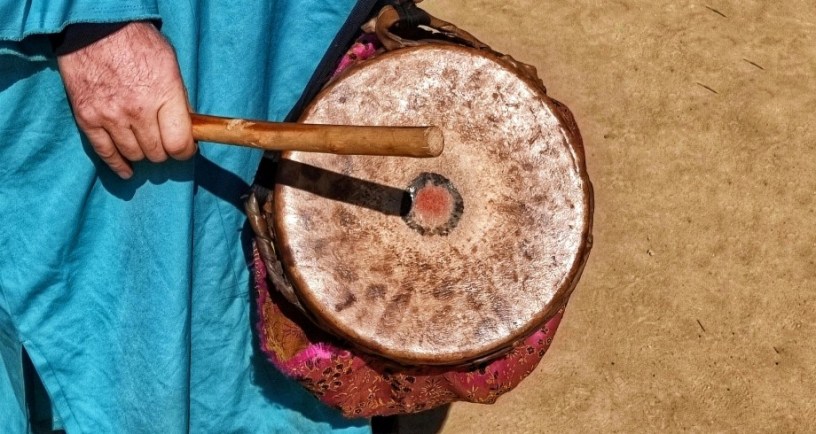
“Sadhu! Sadhu!” said the king. “Chandaka, take up the drum. March through my prisons, cry amnesty.”
Viplava recoiled, sputtered a moment. “Don’t you want to know what they did?”
“I have a son, Viplava. The most excellent son a man could have. This day is beyond justice.”
“But lord, the executioner will starve if not given his man.” There stood Viplava, at the front of the ministers, his karma flung over the court, a conqueror’s banner. Surely, he pictured criminals rioting from the prisons, repeating their wrongs, sowing chaos. The safety of the kingdom demanded their containment.
“One sowed four fields with salt,” Viplava said. “She would render every field in the kingdom barren, given the chance.”
How wrong I was. Justice was just Viplava’s excuse. Blinded by the wrong done to him, he pressed all criminals into an indiscriminate lump—all bent-over, hell-bound, depraved, loathing the sun and moon and everyone that stands upright beneath them.
Knots of ministers chattered about the dangers of the king’s proposal: fear of assault in the city, reduction in tax levies. How many craftsmen will be afraid to leave their homes? Would the army be reduced to almshouse attendants? What of the impact on trade?
But their karma roiled, became turbid, became green, hissing self-servingly about loss of luxury, who the king would blame if the kingdom spiraled out of joint. If they continued as they were, they would live future lives as hungering ghosts with ponderous bellies and necks thin as needles, unable to swallow. Their greed would fester and they would suffer rebirth again, propagating their karma, more lives as ghosts, more greed, greed begetting greed.
Like a lion among his cubs, the king bore the squabbling, and joy did not flee his face. At last, he raised his hand to signal calm. “Asita, you have been silent, and alongside your silence, every other voice reaches my ear like haggling in the marketplace.”
Today king Shuddhodana dwelt beyond punishment and blame, but his karma embraced his son’s, entwined among the court, and then rambled out among the squares and boulevards of Kapilavatsu. I knew the meaning: he loved his son more than all his subjects together. Such unequal care would eventually find him out. If not in this life, then another by the rigid law of karma.
The god of death gripped the world, and all wandered like puppets on karmic strings. “There must be an end to it,” I murmured.
“What’s that?” said the king.
The strings of karma were not unseverable. I could see it. “Lord, may the salt-sower Viplava speaks of be brought to us?”
“Lord—”
The king raised a hand, silenced Viplava, sharply enough to cut the first string.
#
When Chandaka led Tamisra into the throne room at spear point, she wore a fresh shawl and tunic, but the wounds on her back still stunk of blood and salt. Her presence was so far outside the norm, no one found words for their dismay.
Except Viplava. “Lord, Asita violates all custom, shames you on this happy day by bringing this degenerate woman among us.”
“The world is yoked by karma because it continues as it has,” I said. “We must make a change. Viplava, what do you feel for this woman?”
Viplava struggled to bar the storm from his face.
“Answer Asita’s question,” said the king.
“I hate her. Like I hate the day of my death.”
“Tamisra, what do you feel for this man?” I said.
“For him, nothing,” she said. “But I’m glad he will curse no being with birth and death.”
“Look, Viplava,” I said, “She means you no harm—”
“Means me no harm! Consider what she’s taken from me. I see the little prince and…”
“Go ahead,” said the king.
“I envy. I will never have a son so excellent.” Tears glistened in his eyes as he choked off a sob. He issued a ragged breath. “I will never have a son at all.”
Tamisra cut a childless man, but rehashing her crime wouldn’t help Viplava. “Viplava, any man can envy the king for fathering a boy so excellent, but the great man envies nothing,” I said.
Viplava stammered with incredulity. “Asita, you wrong me. Do not forget who the victim is here.” So Viplava still recognized only victims, evil-doers, and an uneven equation between them.
“See her, bleeding, wretched. You did that. And for what? Every wrong she’s done you, karma has done to you innumerable times before. Doubtlessly, you’ve lived eunuch lives, childless lives. We all have.”
He grumbled, his retort dissipating.
I offered Viplava the sleepy infant. “The little prince can punish no one. Not today, not ever. Be like him.”
Viplava’s tears fell on the prince’s cheeks. “I was wrong earlier, when I said I didn’t know. The prince will be a buddha.”
I turned to Tamisra. “How can you feel nothing for this man?”
“He’s only karma, mindless, driving the world, proliferating itself.”
I shook my head. “Detachment is not enough. Nor is compassion only for the unborn. Identify with the man before you.”
She regarded Viplava, not with scorn or resentment, but like one prisoner regards another marched away for execution. Rebirth after rebirth, karma was the executioner. It was an impotent look, but it could make all the difference.
“With your leave, lord, I would have Tamisra hold your son.”
Shuddhodana frowned. “Isn’t she a demon?”
“She was a demon. Now she is a woman. She’s committed grave wrongs, but so have we all, in this life or another.”
Shuddhodana blinked. He nodded stiffly.
Viplava did not protest. He sidled toward Tamisra. Her hand brushed his hand when she accepted the shining prince. Viplava did not startle at her touch.
Tamisra brushed one of Viplava’s tears from the prince’s cheek. She brushed another. Her tears replaced his, rain from a clear sky.
“Why do you weep?” I said.
“I wanted an end to birth and death, would’ve torn the seed out of every man to do it. But if I had, this darling child would not be born.” She twirled her finger around the curl on the prince’s forehead.
“Then dry your tears,” I said. “The birth and death of multitudes will end with him. Yes, we must wait a little longer, some of us must wait, but it need not be with idleness or selfish anticipation. Let us do as the king commanded. Open the prisons, bang the drum of amnesty because one day the little prince will bang the drum of the deathless.”
 Fellowship & Fairydust